do you need a scale for espresso
Do You Need a Scale for Espresso?
A practical guide to when an espresso scale matters, what it measures, and how beginners should use dose, yield, and time.
Reading brief
Decision first. Evidence immediately after. By Marco Reyes 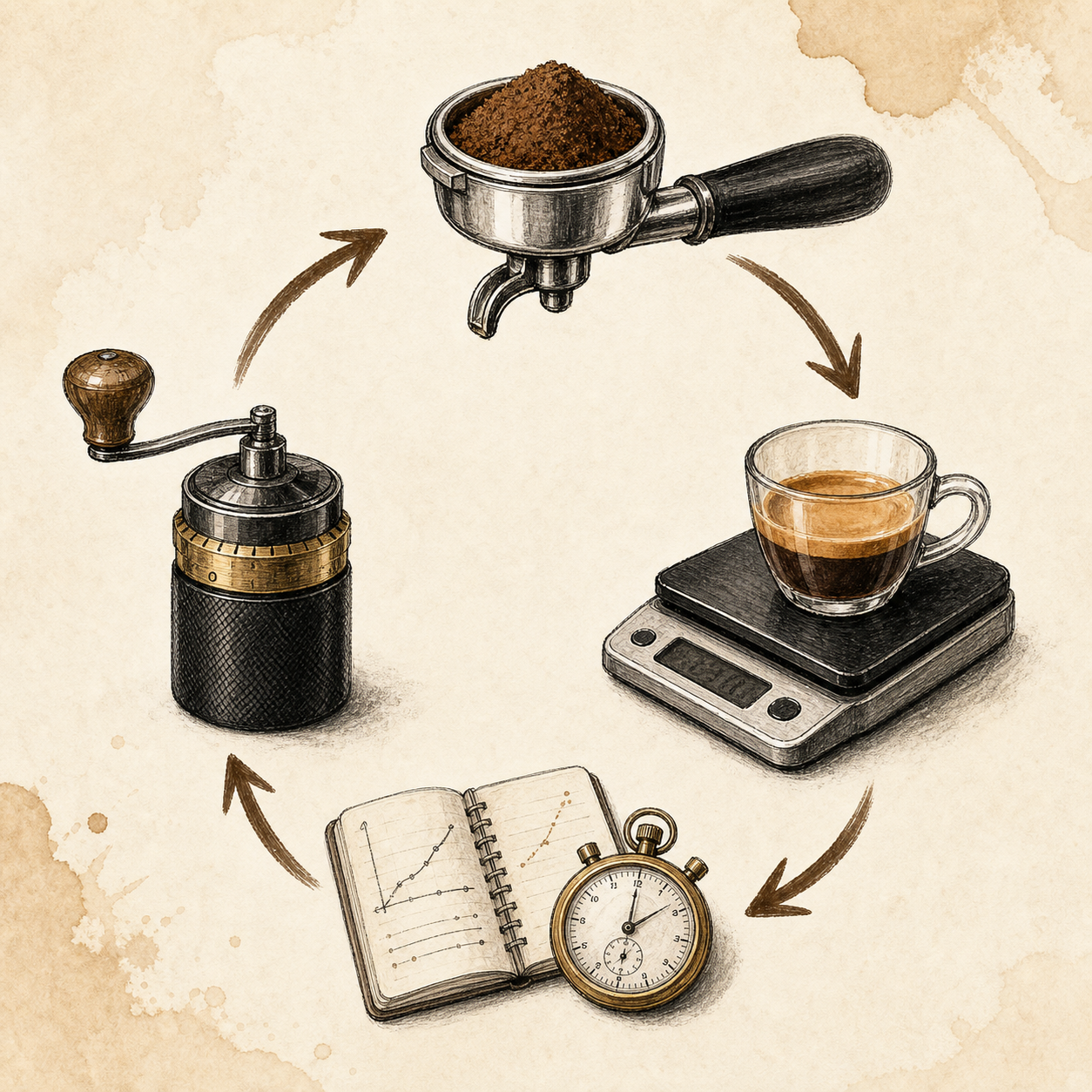
Yes, you need a scale for espresso if you want repeatable shots. You can make coffee without one, and a pressurized-basket machine can still produce a drink with pre-ground coffee, but you will be guessing at the two numbers that define the shot: how much dry coffee went in and how much espresso came out.
That guessing gets expensive fast. If a shot tastes sour, bitter, thin, or suddenly different from yesterday, the scale tells you whether the recipe changed or the coffee changed. Without it, every fix is a hunch. With it, you can keep dose and yield steady, adjust grind one step at a time, and learn what actually moved the flavor.
My practical rule: buy a scale before you buy decorative accessories. A cheap, fast scale that fits under your cup is less exciting than a distribution tool, but it answers the question that matters every morning: did I pull the shot I intended to pull?
What the scale actually measures
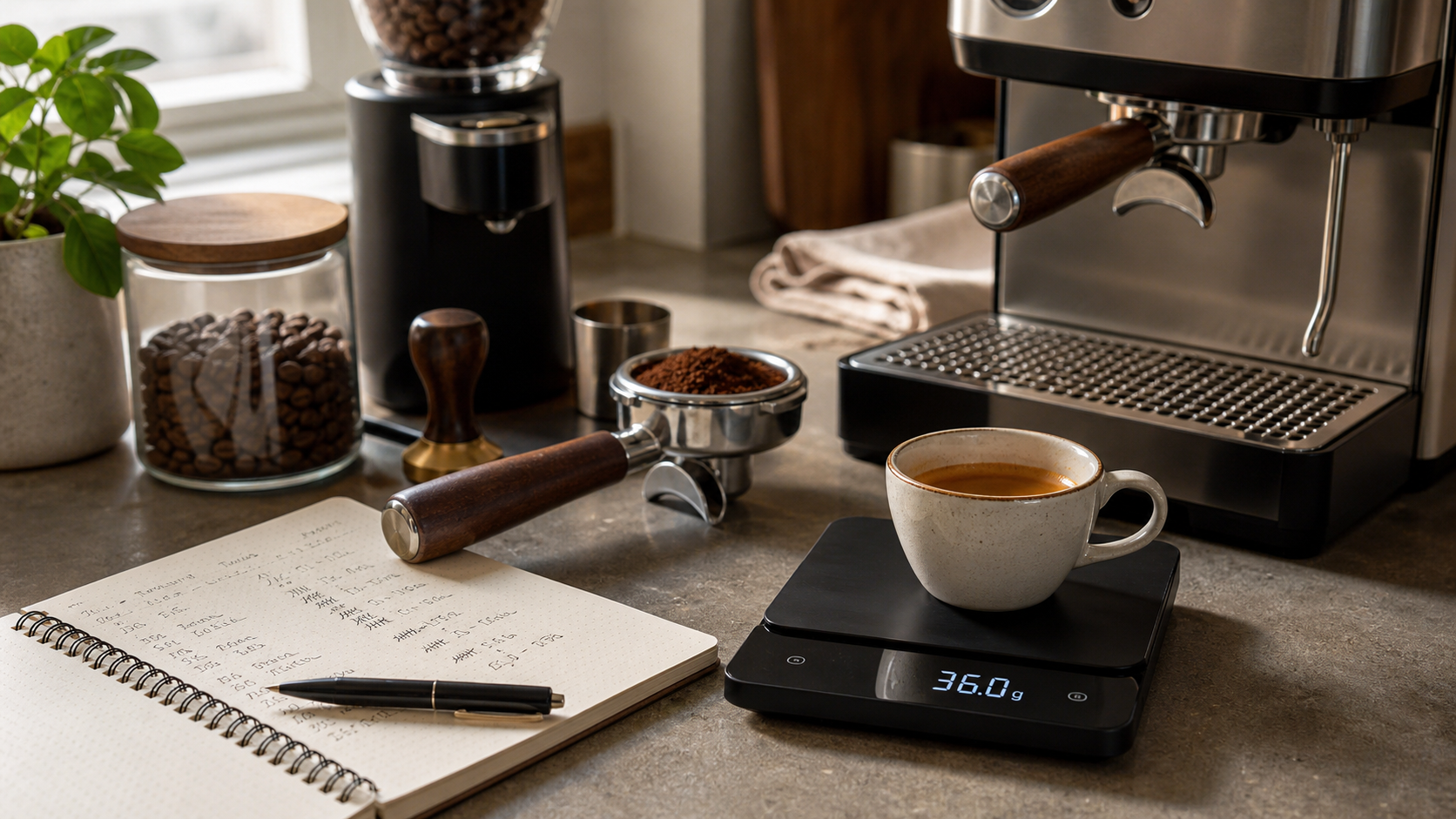
For espresso, the scale measures two things first: dose and yield. Dose is the dry coffee in the basket. Yield is the liquid espresso in the cup. Time is the third number, usually tracked with the machine timer, a phone, or the timer built into some scales.
Those three numbers are not a magic recipe. They are a way to make the next shot comparable to the last one. The Specialty Coffee Association’s recent espresso definition article describes modern espresso practice around measured dose, beverage weight, time, pressure, temperature, and pre-infusion. The key beginner lesson is simple: espresso is controlled by measurements, not by vibes.
Scott Rao’s explanation of espresso brewing ratio uses the same basic relationship: beverage weight divided by dry coffee weight. If you use 18 grams of ground coffee and stop at 36 grams of espresso, you pulled a 2:1 beverage-to-dose ratio. That does not mean every coffee wants that ratio. It means you finally know what ratio you made.
Why volume is a trap
Espresso volume is slippery because crema takes space. A fresh coffee with a thick crema can look like a bigger shot than an older coffee at the same beverage weight. A tall narrow cup can make a shot look different from a wide cup. If you stop by eye, you are measuring foam, cup shape, and memory as much as espresso.
Weight is less dramatic and more useful. Thirty-six grams in one cup is still thirty-six grams in another cup. That lets you compare shots even when roast level, cup shape, and crema change.
This is why I do not like teaching beginners to chase “one ounce” or “two ounces” first. It sounds simple, but it hides the variables. Start with weight, then taste. If the shot is sour and fast at a known dose and yield, the sour espresso troubleshooting guide has a real starting point. If the dose and yield are unknown, the guide has to guess with you.
When a scale matters most
A scale matters most when you are learning non-pressurized espresso. In that setup, grind size, dose, distribution, and yield all show up in the cup. Breville’s Bambino manual explains that grind size affects the rate water flows through the coffee and the taste of the espresso. That makes the scale the measuring partner for the grinder: the grinder changes resistance, while the scale tells you whether the recipe stayed stable.
Use a scale immediately if:
- Your shots taste different from day to day.
- You are changing grind size and cannot tell whether yield changed too.
- You are trying to repeat a good shot.
- You are comparing beans or roast levels.
- You are learning from a recipe that lists grams instead of volume.
You can wait if your goal is only easy milk drinks from pre-ground coffee in a pressurized basket. Even then, I would still buy the scale early because it teaches good habits before you upgrade.
The beginner recipe I would track
For a first serious setup, I would start with a simple notebook row:
- Dose: 18.0 g
- Yield: 36.0 g
- Time: about 25 to 30 seconds
- Taste: sour, balanced, bitter, thin, heavy, or sweet
- Change for next shot: one grinder step finer, one step coarser, or no change
That 18-in, 36-out pattern is not sacred. It is a common starting point because it is easy to understand and easy to adjust. Clive Coffee teaches espresso through dose, yield, and time, and uses a weighed recipe as the baseline before tasting and adjusting. The important part is not copying one shop’s numbers forever. The important part is building a shot record that gives you a next move.
If your 18 g dose produces 36 g of espresso in 18 seconds and tastes sharp, you have a fast shot. Grind finer or improve puck prep, then try again. If it takes 45 seconds and tastes harsh, you probably went too fine or created too much resistance. Grind coarser, keep the dose and yield steady, and compare.
What kind of scale is enough
You do not need a luxury scale to learn espresso. You need one that fits on your drip tray, reads small changes clearly, responds quickly enough while the shot is flowing, and is easy to tare with a cup on top. Water resistance is helpful because espresso counters are wet places, but I would not treat premium features as mandatory on day one.
The shape matters more than the marketing. Some kitchen scales are too tall to fit under the portafilter with a cup. Some are slow enough that the display lags behind the shot. Some turn off at exactly the wrong moment. Before buying, check the physical clearance under your machine, not just the product photo.
If your machine is compact, the beginner setup guide is the better place to plan the whole bench: machine, grinder, scale, water, and a workflow you will repeat. If you are still splitting the first budget, the grinder vs machine budget guide explains why the scale is cheap but non-negotiable.
What the scale cannot fix
A scale cannot fix stale coffee, an imprecise grinder, hard water, a dirty shower screen, or a machine that is not warmed up. It also cannot tell you what tastes good. It only tells you what happened.
That is still powerful. If the scale says nothing changed and the cup tastes worse, look at bean age, water, puck prep, or machine temperature. If the scale says the yield ran long, stop blaming the coffee and fix the recipe. If your water routine is the weak link, start with the hard water and espresso machine guide before you buy another tool.
This is the real value of a scale: it removes false suspects. The fewer suspects you have, the faster you learn.
FAQ
Can I make espresso without a scale? Yes, but you will be guessing at dose and yield. That can be acceptable for casual milk drinks, especially with a pressurized basket, but it makes dialing in much harder.
Should I weigh the beans or the ground coffee? Weigh the ground coffee that actually goes into the basket. If your grinder retains coffee, the bean weight and basket dose may not match.
Do I need a scale with a timer? No. A built-in timer is convenient, but a separate phone timer works. The more important features are fit, speed, readability, and reliable tare.
Is 18 grams in and 36 grams out always right? No. It is a useful starting point, not a law. Different coffees, baskets, and tastes may want shorter or longer yields.
What should I buy first, a scale or a tamper upgrade? Buy the scale first. A nicer tamper may improve feel, but a scale tells you whether the shot recipe is repeatable.
Bottom line
If you want espresso to become repeatable, buy a scale early. Use it to track dose, yield, and time. Then change one variable at a time. That small habit will improve your shots faster than most shiny accessories because it turns every bad shot into useful evidence.
Hands-on tested and edited by Marco. Data current as of June 21, 2026.
Source-verified and edited by Marco Reyes. Data current as of June 21, 2026.
References