do you need a grinder for espresso
Do You Need a Grinder for Espresso?
A beginner guide to when an espresso grinder matters, when pre-ground coffee is acceptable, and what to buy before upgrading.
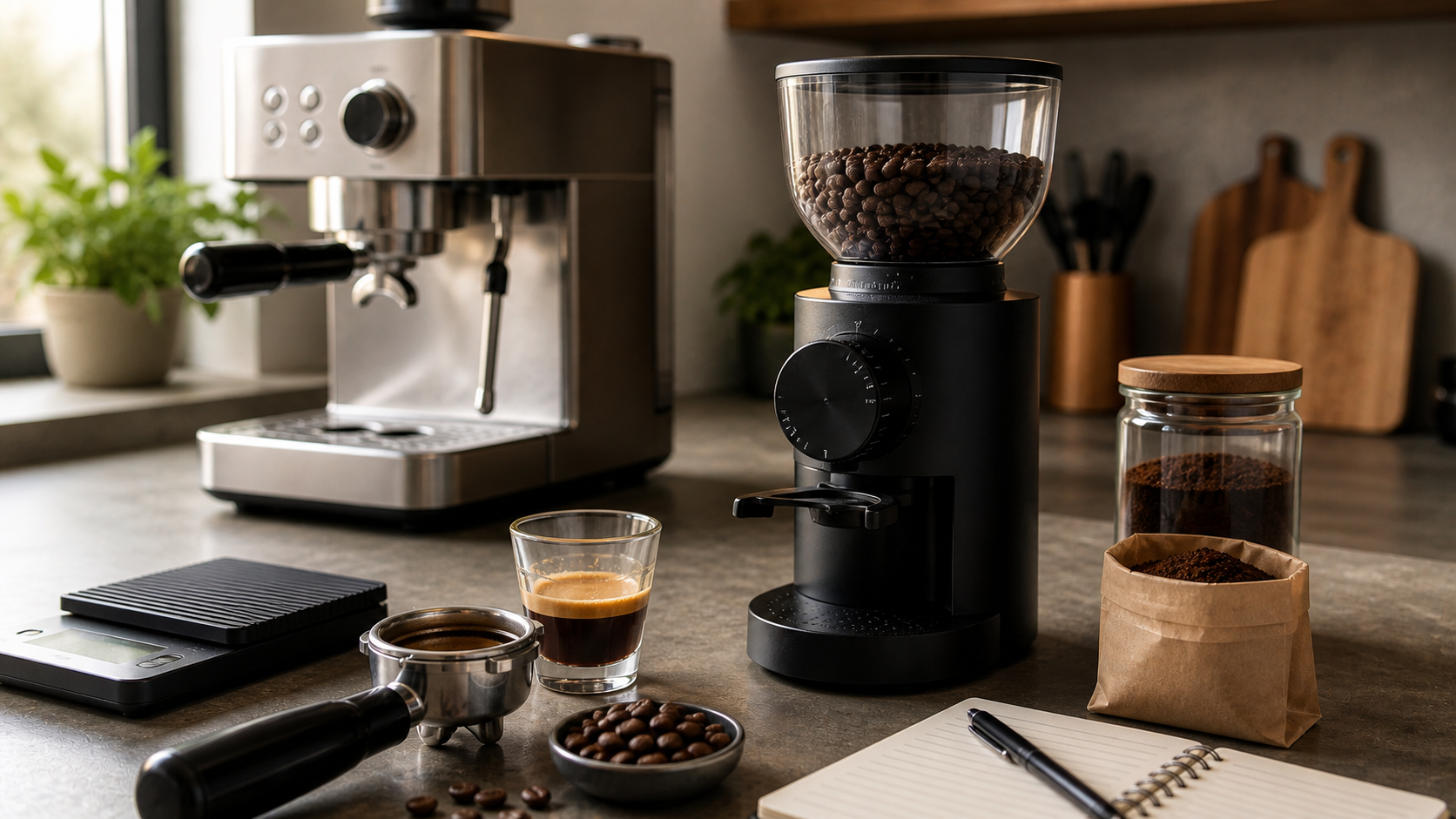
Reading brief
Decision first. Evidence immediately after. By Marco Reyes 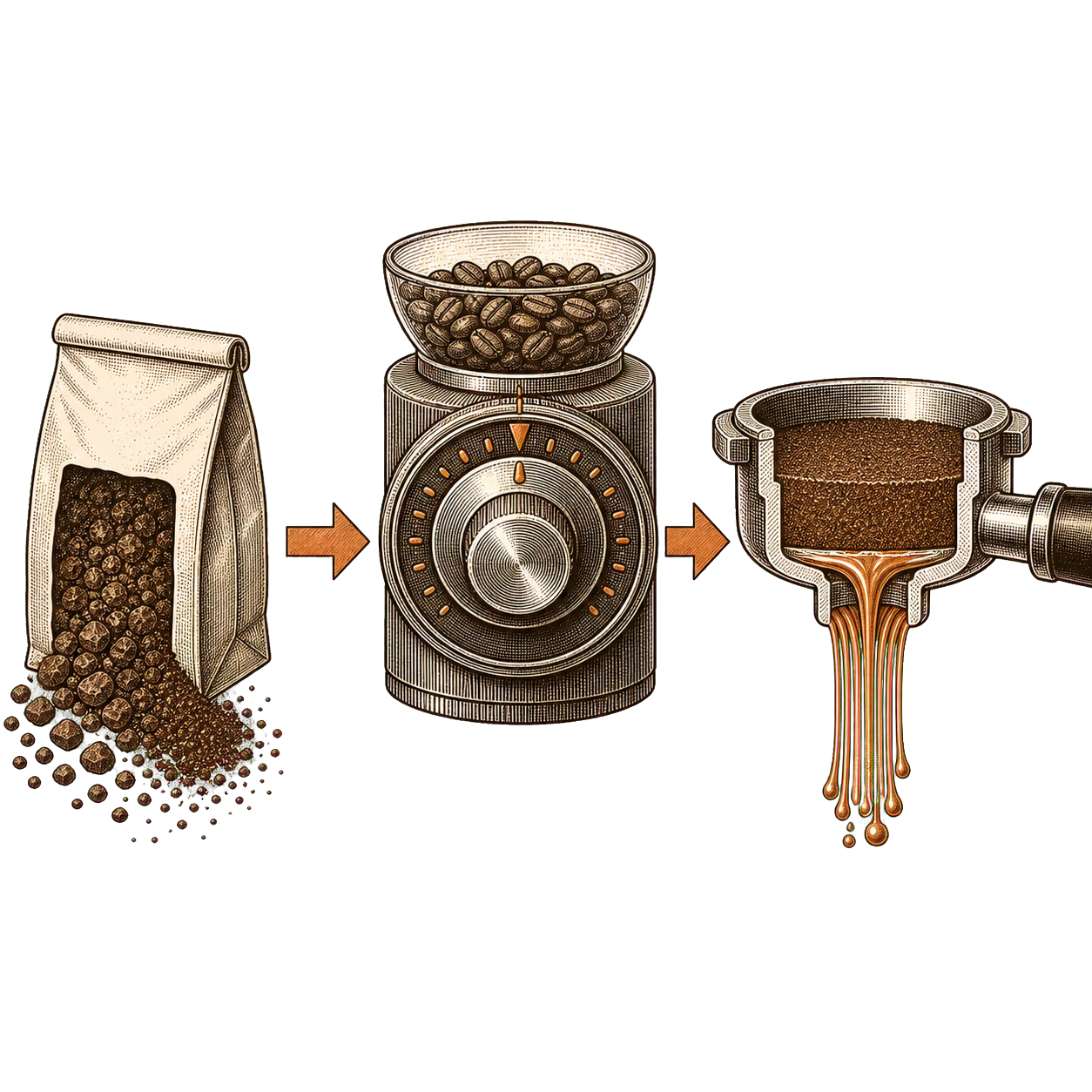
Yes, you need a grinder for espresso if you want to dial in shots instead of hoping the bag of pre-ground coffee happens to match your machine. You can make a drink with pre-ground coffee and a pressurized basket, but you give up the main control that fixes sour, fast, thin shots: grind size.
That does not mean every beginner needs a $600 grinder before pulling a shot. It means the moment you want repeatable espresso from fresh beans, the grinder stops being optional. The machine supplies pressure and heat. The grinder decides how much resistance the coffee puck gives that water. If the grind is wrong, the best beginner machine on the counter still has to push water through the wrong puck.
My practical rule: buy the machine you can live with, but do not spend so much on the machine that you are forced into stale pre-ground coffee or a grinder that cannot make small espresso adjustments. That is the path to blaming the machine for a problem the grinder caused.
What the grinder actually controls
Grind size controls flow. A finer grind creates more resistance, usually slowing the shot and increasing extraction. A coarser grind creates less resistance, usually speeding the shot and lowering extraction. Breville’s Bambino Plus manual makes the same relationship explicit: grind size affects how quickly water flows through the coffee and how the espresso tastes. The manual also points to coffee that is too coarse as one cause of an under-extracted shot.
That is why so many beginner espresso problems sound like grinder problems:
- The shot gushes in a few seconds.
- The espresso tastes sour, thin, or hollow.
- One grinder click chokes the machine and the next click runs too fast.
- The same recipe tastes different every morning.
- You can only use pre-ground coffee in a pressurized basket.
The machine did not suddenly forget how to make espresso. The puck is not giving the water the right resistance.
If your current issue is a sour shot, start with the sour espresso troubleshooting guide. If the guide keeps sending you back to “grind finer” and your setup cannot do that in controlled steps, that is the grinder telling on itself.
When pre-ground coffee is acceptable
Pre-ground coffee is acceptable when convenience matters more than dialing in. It can also be useful while you are learning the machine workflow: dosing, locking in the portafilter, starting and stopping the shot, cleaning up, and steaming milk. If the machine has pressurized baskets, pre-ground coffee can produce a foamy, espresso-like drink that is good enough for milk drinks.
The tradeoff is control. Pre-ground coffee is ground for someone else’s machine, basket, recipe, age, and storage. By the time it reaches your kitchen, you cannot make it one step finer or one step coarser. You can change dose, yield, and tamp, but the biggest lever is frozen.
That matters because espresso is narrow. CoffeeReview’s espresso grinding reference separates espresso from less demanding brew methods because pump and piston espresso machines need a precise grind. That is the difference between “coffee comes out” and “I can steer the shot.”
Use pre-ground coffee if:
- You are testing whether home espresso fits your routine.
- You mostly drink milk drinks and want low friction.
- Your machine uses pressurized baskets and you accept the ceiling.
- You are saving for a grinder instead of buying the wrong one now.
Do not use pre-ground coffee as proof that a machine is bad. A fast sour shot from stale pre-ground coffee tells you very little about the machine.
Pressurized baskets change the answer
Pressurized baskets are forgiving because they create artificial resistance after the coffee bed. That helps pre-ground coffee produce crema-like foam even when the grind is not espresso-perfect. For a beginner, that can be useful. It lowers the penalty for imperfect grind and technique.
But it also hides information. A non-pressurized basket exposes what the grind and puck prep are doing. If the grind is too coarse, the shot runs fast. If the puck channels, the taste gets sour and bitter at the same time. Those are frustrating signals, but they are also useful signals.
So the answer depends on what you want:
- If you want easy milk drinks, a pressurized basket plus pre-ground coffee can be a reasonable start.
- If you want to learn espresso, a real grinder and a non-pressurized basket teach you faster.
- If you want to compare machines honestly, use a grinder good enough that the machine gets a fair test.
This is also why I do not like telling beginners to buy the fanciest machine first. Without a grinder, you cannot tell whether the machine is limited or whether the coffee puck is simply wrong. The grinder vs machine budget guide goes deeper on that split.
What counts as an espresso-capable grinder
An espresso-capable grinder does not have to be luxurious. It does need four things:
- Burrs instead of blades.
- A grind range fine enough for espresso.
- Small enough adjustment steps in the espresso range.
- A workflow you will actually repeat every morning.
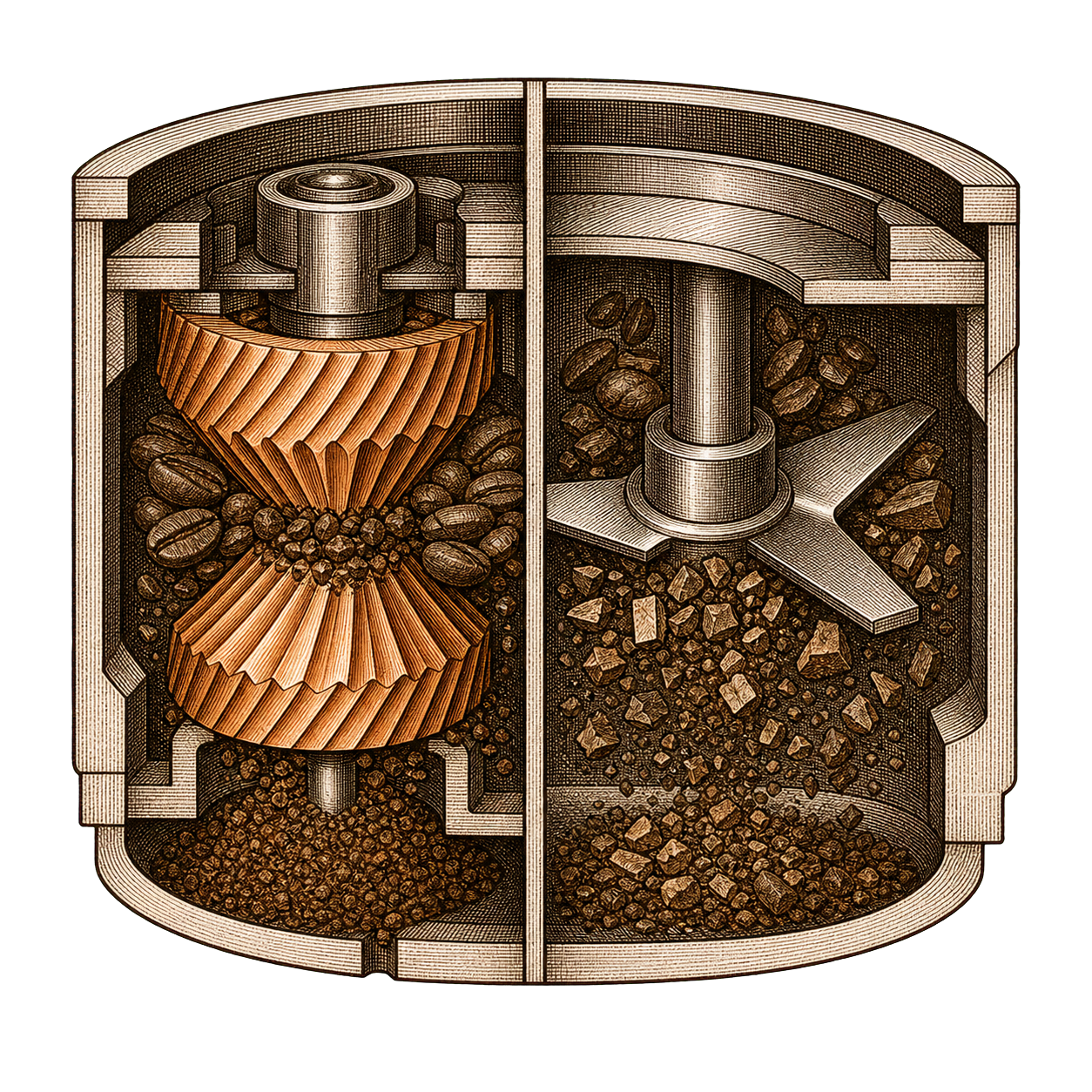
Burrs matter because they set a gap and produce more controlled particles than a blade grinder. A blade grinder chops unevenly, leaving dust and chunks in the same dose. That mixture extracts unevenly: fines over-extract, larger pieces under-extract, and the cup tastes confused.
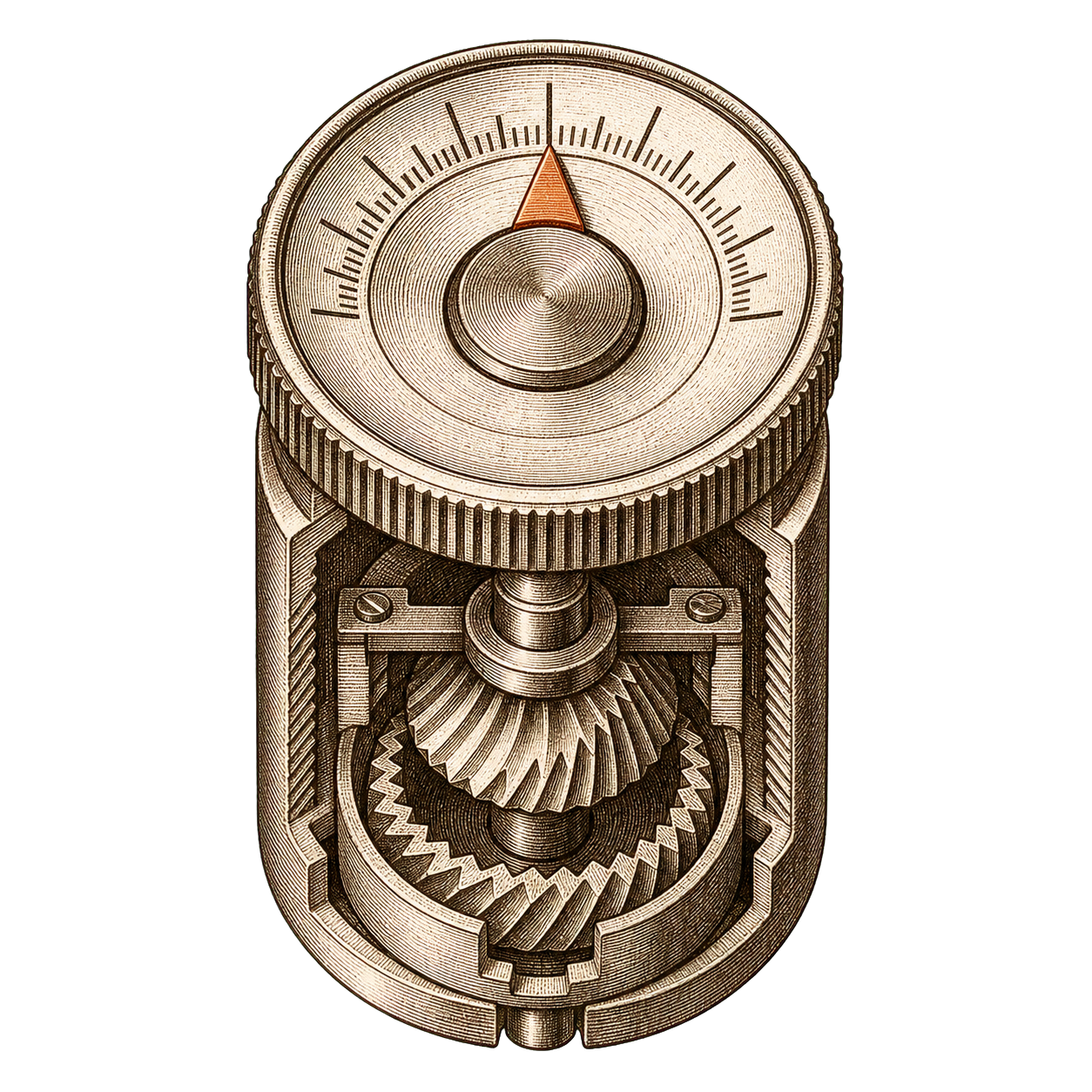
Adjustment matters even more. Baratza describes the Encore ESP as built for espresso precision, and the reason that claim matters is not the brand name. It is the idea of usable resolution in the espresso range. You need enough small moves that one adjustment does not jump from “too fast” to “machine choked.”
Here is the quick test I care about more than the marketing language: can you make a sour fast shot run a little slower without choking the machine? If yes, the grinder is useful. If no, it will fight you.
How much should you spend first?
Spend enough that the grinder has espresso adjustment, then stop before you buy features you cannot yet use. For many beginners, that means the grinder deserves more respect than the machine upgrade. It may not be the most glamorous purchase, but it is the tool you adjust every time beans age, roast level changes, or a recipe runs fast.
The Specialty Coffee Association’s recent espresso definition article describes common modern espresso practice around measured dose, yield, time, pressure, and temperature. The important beginner takeaway is not that one recipe is sacred. It is that espresso is measured. A grinder is what lets those measurements become repeatable instead of ceremonial.
A sane first setup looks like this:
- A basic real espresso machine.
- An espresso-capable burr grinder.
- A scale that fits under the cup.
- A notebook or notes app for dose, yield, time, and taste.
- Cleaning supplies and decent water.
That setup will teach you more than a better machine with pre-ground coffee. It gives you the variables you need to diagnose the cup.
When you can wait
You can wait on a grinder if you are still deciding whether home espresso is worth the mess. You can also wait if your current machine only uses pressurized baskets and your goal is a latte that tastes better than office coffee. There is no shame in that. The mistake is thinking the same setup will also teach you precise espresso.
Use the waiting period deliberately. Learn the workflow. Notice what annoys you. Track whether you actually make espresso three mornings a week or whether the machine becomes counter decor. If the habit sticks, the grinder becomes the first serious upgrade.
I would rather see a beginner wait one month and buy a grinder that can actually dial in than buy a cheap blade grinder immediately and spend that month learning bad signals.
When the grinder becomes urgent
The grinder becomes urgent when your problems repeat after technique cleanup. If your tamp is level, dose is stable, yield is measured, machine is warm, and shots still run too fast, the grinder is not optional anymore.
It is also urgent when you move from pressurized to non-pressurized baskets. A non-pressurized basket asks the coffee bed to create the resistance. Pre-ground coffee usually cannot match that basket, bean, and target recipe closely enough.
Watch for these upgrade triggers:
- Every shot is sour unless you run it long and watery.
- You cannot slow the shot without overdosing the basket.
- Your grinder has big stepped jumps in the espresso zone.
- You are buying fresh whole beans but grinding somewhere else.
- You want to repeat a good shot tomorrow and cannot.
That last one is the real point. Espresso is not just about making one good shot. It is about making the next good shot on purpose.
FAQ
Can I make espresso without a grinder? You can make an espresso-like drink with pre-ground coffee, especially in a pressurized basket. For repeatable non-pressurized espresso, you need a grinder that can adjust in the espresso range.
Is a blade grinder good enough for espresso? No. A blade grinder makes uneven particles and gives you almost no precise control over flow. It is better to use pre-ground coffee in a pressurized basket while saving for a burr grinder.
Should I buy a grinder before a better machine? Usually yes, if your current machine can produce basic pump espresso. A better grinder lets you diagnose and improve the shot. A better machine cannot fix coffee that is ground wrong.
Do I need a scale too? Yes. The grinder changes resistance; the scale tells you whether dose and yield stayed stable. Without a scale, you will not know which variable changed.
What should I read next? If you are planning the whole setup, start with the beginner espresso setup guide. If your current shots are sour, use the sour-shot fix guide before buying anything.
The decision
If you only want easy milk drinks, pre-ground coffee and a pressurized basket can get you started. If you want to learn espresso, buy an espresso-capable burr grinder before chasing a better machine. The grinder is not a luxury accessory. It is the control that lets you turn a bad shot into the next useful test.
Transparency: Researched and written with AI assistance, hands-on tested and edited by Marco. Data current as of June 16, 2026.
Source-verified and edited by Marco Reyes. Data current as of June 16, 2026.
References