Breville Bambino vs Bambino Plus
Breville Bambino vs Bambino Plus: Which to Buy
A practical Bambino vs Bambino Plus comparison for beginners: espresso, milk, accessories, counter space, workflow, and when the upgrade is worth it.
Reading brief
Decision first. Evidence immediately after. By Marco Reyes 
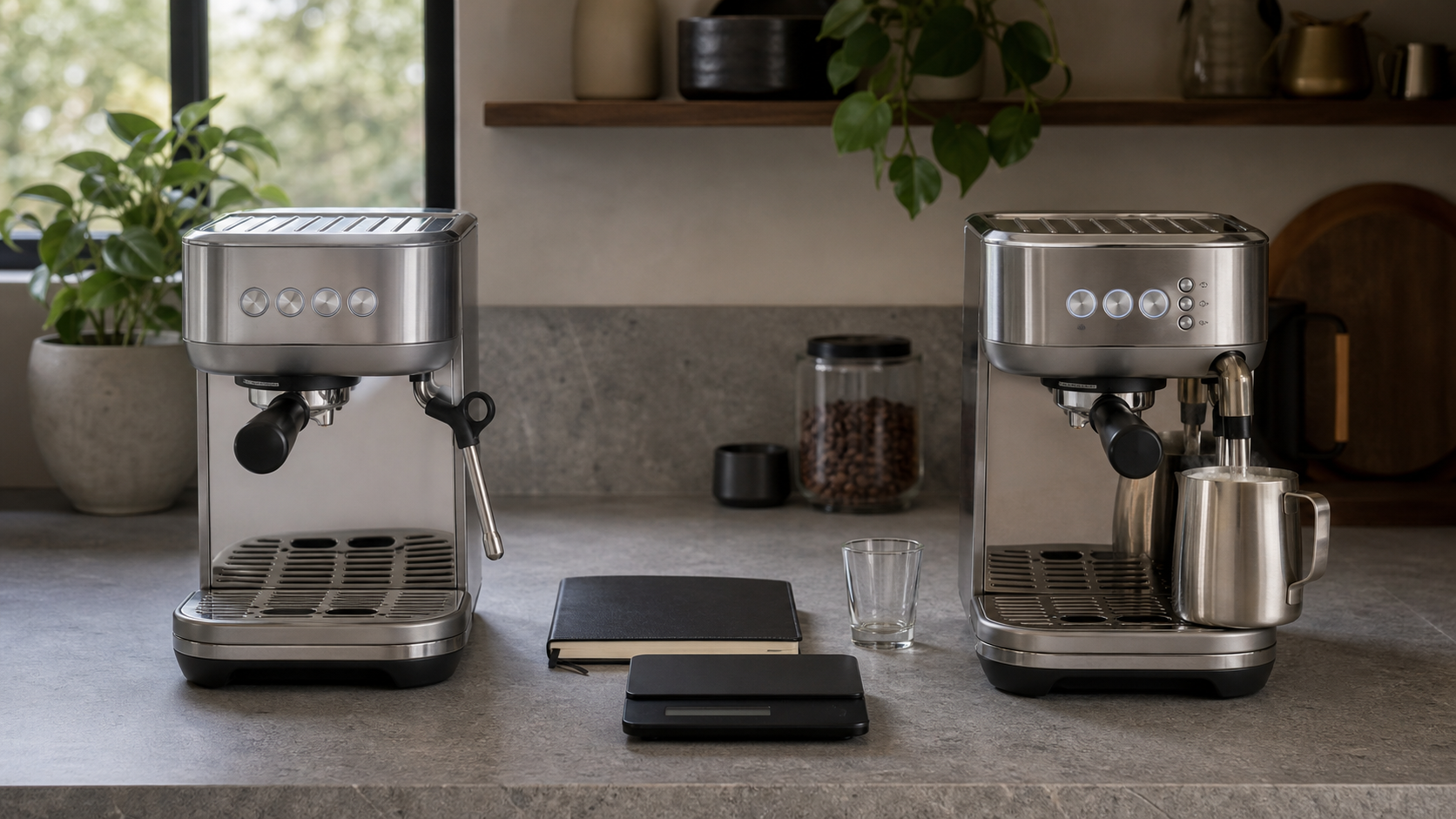
The Breville Bambino is the better default for most beginners who mostly care about espresso and budget. The Bambino Plus is the better pick if milk drinks are the point, you want automatic milk texturing, or you value the larger water tank and the extra convenience that comes with it.
That is the useful answer. The wrong answer is pretending one machine is universally better. I have pulled shots on both, and the honest version of this comparison is that they share more than they differ — so the decision is really about your milk routine, your counter, and where you would rather spend the next chunk of money.
What both machines share
Breville’s official pages position both machines as compact beginner espresso machines with ThermoJet heating, 54mm portafilters, and low-pressure pre-infusion followed by a 9 bar extraction driven by a 15 bar Italian pump. Both ship with one-touch 1 and 2 shot volumetric control. In other words, the part that actually pulls the espresso — the heating system, the group, the pump, the basket size — is the same on both machines.
That single fact reframes the whole comparison. You are not choosing between a weak espresso machine and a strong one. You are choosing between the same espresso engine wearing two different milk-and-convenience packages.
It also means the grinder still matters more than the badge. Neither machine magically fixes stale beans, coarse grinding, or a recipe that changes every shot. If you are deciding between spending more on the Plus or buying a better grinder, read grinder vs espresso machine budget before you spend a dollar on either. In my experience that decision moves more shots from “drinkable” to “good” than the Bambino-versus-Plus question ever will.
The thermojet engine, and why heat-up is not the deciding factor
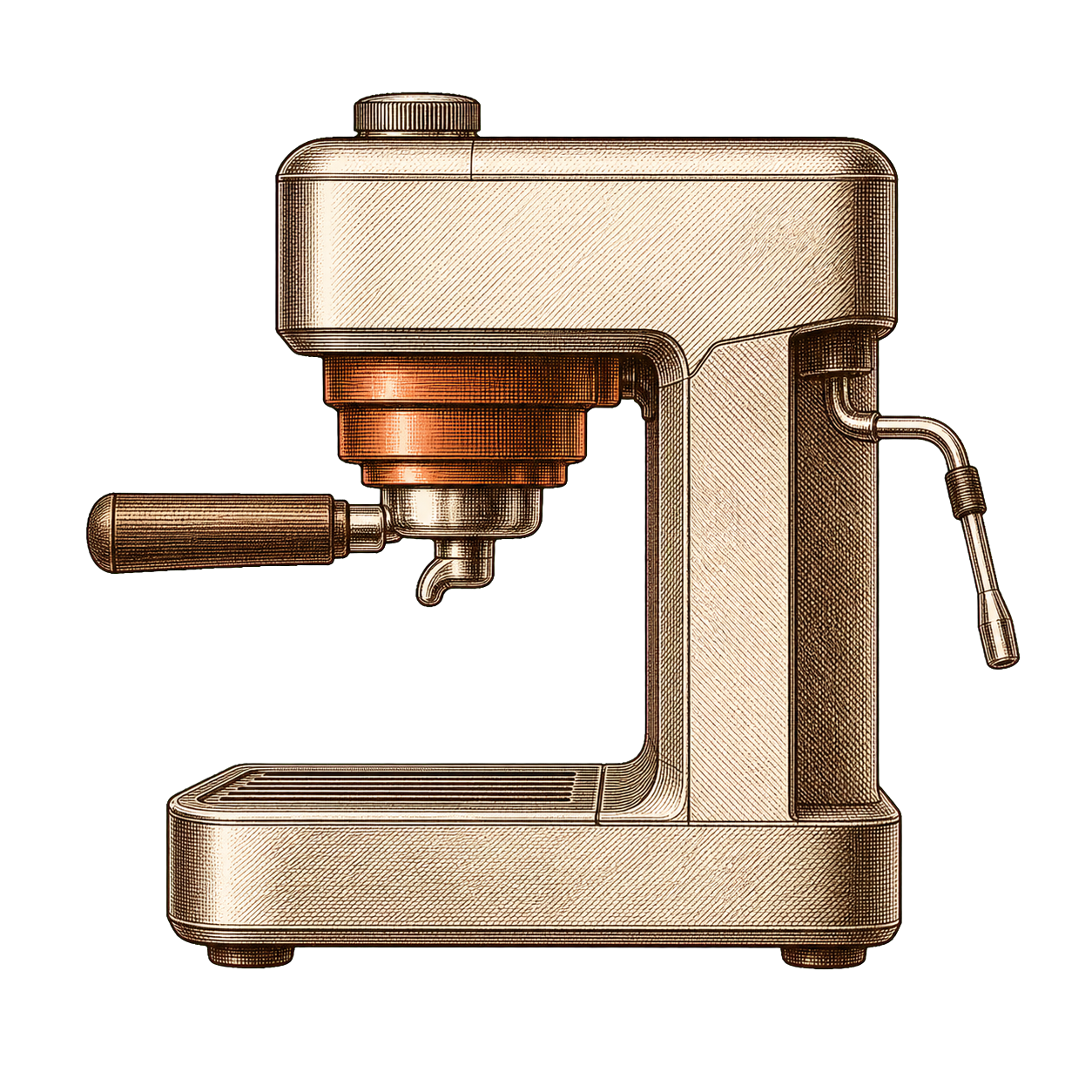
The headline both machines share is speed. Breville’s ThermoJet heating system reaches optimum extraction temperature in 3 seconds, because it heats water on demand instead of keeping a large boiler warm. On the Bambino Plus, Breville adds that the system uses up to 32% less energy annually than a traditional Thermoblock.
Here is the practical version of that spec: from a cold start, you are pulling a shot in well under a minute on either machine. That is genuinely useful for a weekday morning, and it is identical between the two. So if you have read that one Bambino is “faster” than the other, ignore it — the heat-up advantage is shared, not a differentiator.
The Bambino case
Choose the Bambino if:
- You want the lower-cost entry point.
- You drink straight espresso or simple milk drinks.
- You are willing to learn manual steaming.
- You want the narrowest footprint.
- You would rather put more budget into the grinder.
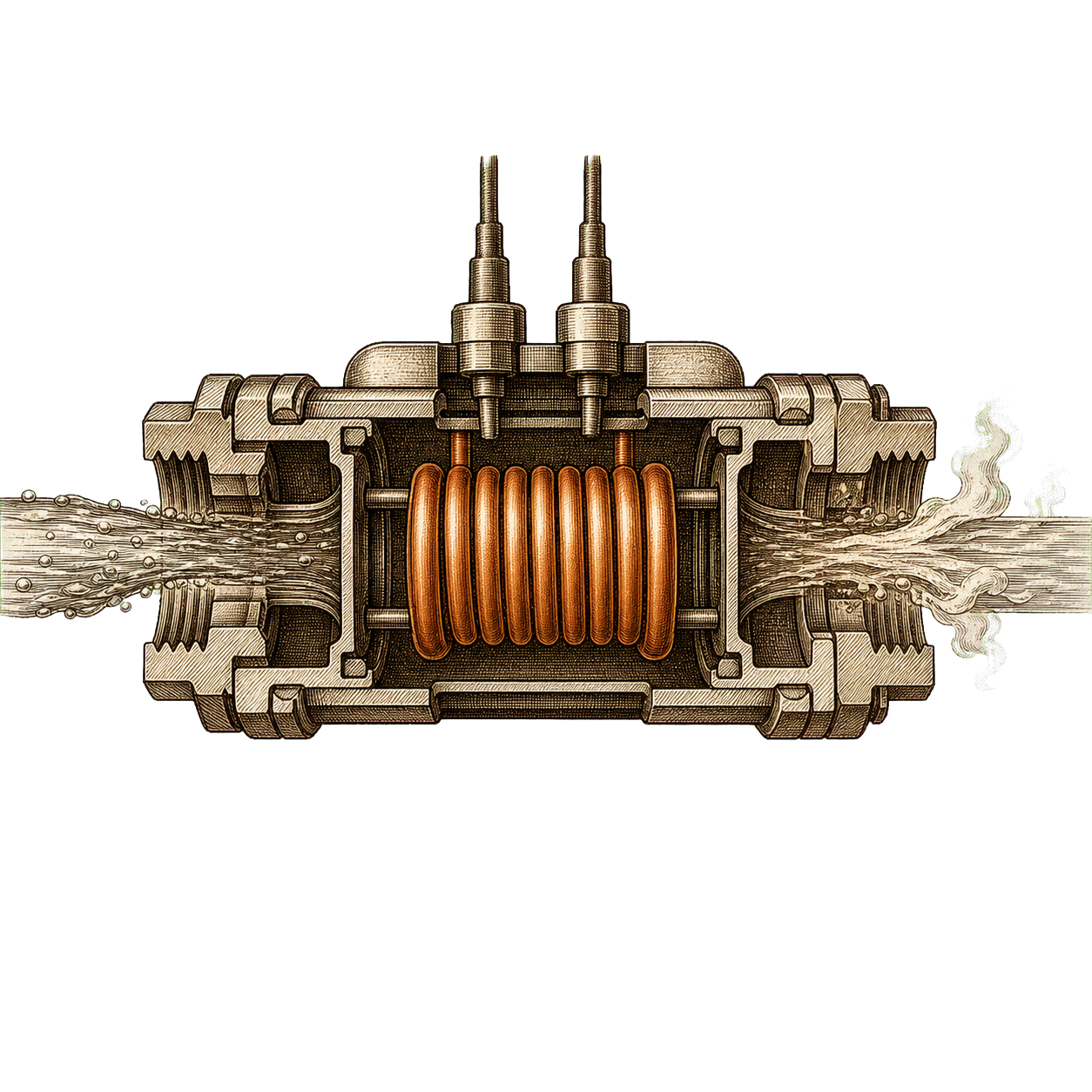
Breville lists the Bambino at 6.25 x 13.5 x 12 inches on its official product page. That is genuinely compact for a pump espresso machine, and it is the single dimension where the plain Bambino clearly wins: at 6.25 inches wide it slips into counter gaps the Plus cannot. The product page also lists the 54mm portafilter and an 18g coffee dose, which makes it a sensible machine for learning a repeatable double-shot workflow.
In the box, Breville includes single wall and dual wall filter baskets for both 1 and 2 cups, a milk jug, the portafilter, a tamper, a steam wand tip cleaning tool, and descaling powder. Two things stand out by their absence compared with the Plus, and I will come back to them: there is no Razor precision dosing tool and no cleaning disc in the Bambino box.
The tradeoff is the milk. The Bambino has a manual steam wand — a real one, capable of proper microfoam, but it is a skill you have to build. Manual steaming is learnable, and learning it makes you a better home barista. But if you mostly make lattes before work and have no interest in practicing milk texture, the cheaper machine can cost you attention and a few sad early cappuccinos instead of money.
That is the Bambino’s whole personality: same espresso, smaller footprint, lower price, and a steam wand that rewards practice. For an espresso-first drinker who is happy to learn, it is the smarter buy, full stop.
The Bambino Plus case
Choose the Bambino Plus if:
- You make milk drinks often.
- You want automatic milk texture as a safety net.
- You like a larger water tank.
- You prefer a richer accessory package.
- The higher price does not steal money from the grinder.
Breville lists the Bambino Plus with a powerful hands-free automatic steam wand that delivers microfoam automatically across 3 adjustable milk temperatures and 3 levels of texture. In plain terms: you set a temperature and a texture, drop the wand into the milk, and walk away to pull your shot while the machine froths and shuts off on its own. The first time you do that after fighting a manual wand, it feels like cheating. For a household where one person cares about technique and another just wants a cappuccino, that hands-free wand is the entire reason the Plus exists.
It is also the wider machine. Breville lists dimensions of 7.5 x 13.5 x 12 inches, so it is still compact — just over an inch wider than the Bambino. On the water side, the Plus carries a larger 64 fl oz tank, which means fewer refills if you are making several drinks in a row or steaming a lot of milk.
The accessory package is where the Plus quietly pulls further ahead, and it is underrated. Breville includes the Razor precision dosing tool, a 480ml stainless steel milk jug, both single and dual wall baskets, a 54mm tamper, a cleaning tool, and a cleaning disc. The Razor tool alone is worth calling out: it trims your puck to a consistent dose level, which removes one of the most common beginner variables. The cleaning disc enables a proper backflush-style cleaning the plain Bambino’s box does not set you up for. None of this changes the espresso in the cup directly, but it makes the Plus a more complete starter kit out of the box.
Tom’s Guide’s comparison reaches the same split I do: it emphasizes the Plus as the stronger milk-drink machine while noting the standard Bambino’s price advantage in the US. That matches how I would divide buyers — espresso-focused people should protect grinder budget, and latte-heavy people may earn the Plus back in convenience every single morning.
Espresso quality: probably not the deciding factor
For beginners, the machine choice matters less than recipe control. Dose, grind, yield, water, and fresh beans will decide more of your first shots than the Plus badge ever could. Because both machines use the same ThermoJet heating and the same 54mm portafilter workflow, the bigger question is not “which one can make espresso.” Both can. It is which one makes your daily routine easier enough to justify the price gap.
I want to be precise here because it is where people overspend: buying the Plus will not make your espresso taste better than the Bambino’s. If your shots are sour or hollow, that is a recipe and grind problem on either machine — work through why espresso tastes sour before you blame the hardware. The Plus earns its money on milk and convenience, not on extraction.
Milk workflow is the real split
Milk is where the Plus makes its strongest case, and it is worth slowing down on. Automatic milk texturing helps a beginner get usable, latte-ready texture without first learning the steam-wand dance: angle, depth, the hiss-then-roll, knowing when to stop. The manual wand on the Bambino can absolutely produce better microfoam in trained hands — a single-hole manual wand has a higher ceiling — but it asks you to climb to that ceiling yourself.
So the real question is not “which milk is better.” It is “do you want to learn, or do you want it handled?” If steaming milk sounds like a fun skill, the manual Bambino is the more rewarding tool and saves you money. If steaming milk sounds like a chore standing between you and a flat white, the Plus pays for itself in avoided frustration.
The regular Bambino keeps the process manual, which is cheaper and more educational but less forgiving on a rushed morning. Neither is wrong. They are aimed at different people.
Counter space and the full setup
Both machines are apartment-friendly compared with larger prosumer machines. Still, do not measure only the machine’s width — measure the whole station. Leave room for:
- Grinder
- Scale
- Milk jug
- Knock box
- Water tank access from above or behind
- Steam wand movement
That last point catches people: the wand needs swing room, and the tank needs to come out or be filled. The Bambino’s 6.25-inch body and the Plus’s 7.5-inch body both disappear on most counters, but the working footprint around them is what actually decides whether the setup is pleasant. For a full layout check, including grinder placement, use the small-kitchen espresso setup guide. And if this is your very first setup, the best home espresso setup for beginners guide explains why I tell people to budget for the grinder before they obsess over the machine tier.
The honest cost picture
Here is the framing I wish someone had given me earlier. The Plus costs more than the Bambino, and that difference is real money. The question is what that money buys: a hands-free automatic steam wand, a larger 64 fl oz tank, the Razor dosing tool, and a cleaning disc. It does not buy better espresso.
So run the test against your own budget. If the price difference would otherwise go toward a meaningfully better grinder, buy the Bambino and the better grinder — your cup improves more that way. If your grinder is already handled and you make milk drinks daily, the Plus is the more pleasant machine to live with, and the convenience compounds every morning. There is no universally correct answer, only the correct answer for your routine.
FAQ
Is the Bambino Plus worth it for straight espresso? Usually not, if the extra money would weaken your grinder choice. Both machines share the same ThermoJet engine and 54mm group, so the espresso is the same. The Plus mainly earns its keep through hands-free milk and the larger tank.
Is the Bambino too basic? No. It is basic in the right way for learning: compact at 6.25 inches wide, manual enough to teach you milk technique, and less expensive. Its only real omissions versus the Plus are the automatic wand, the bigger tank, and a couple of accessories.
Should I buy the Plus if I make lattes? Yes, if automatic milk texture and convenience matter to you and your grinder budget is already protected. The hands-free wand with 3 temperatures and 3 textures is the single best reason to choose the Plus.
What comes with the Bambino Plus that the Bambino does not? Breville’s boxes differ: the Plus includes the Razor precision dosing tool and a cleaning disc and the hands-free automatic steam wand, while the standard Bambino ships with a manual wand and descaling powder. Both include single and dual wall baskets, a tamper, and a milk jug.
Do they make the same quality espresso? Yes. Both use ThermoJet heating, a 54mm portafilter, an 18g dose, low-pressure pre-infusion, and 9 bar extraction. Differences in your cup come from grind, dose, and beans, not from which Bambino you own.
The decision
Buy the Bambino if you want the best beginner value, the narrowest footprint, and you are willing to learn manual milk. Buy the Bambino Plus if milk drinks are daily, you want the hands-free wand and the larger tank, and the price gap does not come out of your grinder budget. In both cases, budget for the grinder before you upgrade the machine — that is still the advice that changes the most shots.
Next, settle the question that actually decides cup quality: grinder vs espresso machine — where the first $500 belongs.
Source-verified and edited by Marco Reyes. Data current as of June 2, 2026.
References