espresso machine hard water scale damage
Hard Water and Espresso Machines: Scale Damage
Hard water can change espresso taste and machine reliability. Learn what scale does, when to descale, and what not to guess.
Reading brief
Decision first. Evidence immediately after. By Marco Reyes Hard water is one of the least glamorous espresso problems, which is why it gets ignored until the machine starts acting strange. Scale can affect flow, heat transfer, taste, and reliability. The fix is not to guess. Test your water, follow your machine manual, and treat descaling as part of ownership.
The beginner mistake is thinking descaling is optional maintenance. It is not, especially if your local water leaves white crust in a kettle. I learned this the expensive way — I lost an early machine to scale I could have prevented with a five-minute habit — so I treat water the way I treat fresh beans now: a basic input I get right before I worry about anything fancier.
What hard water does
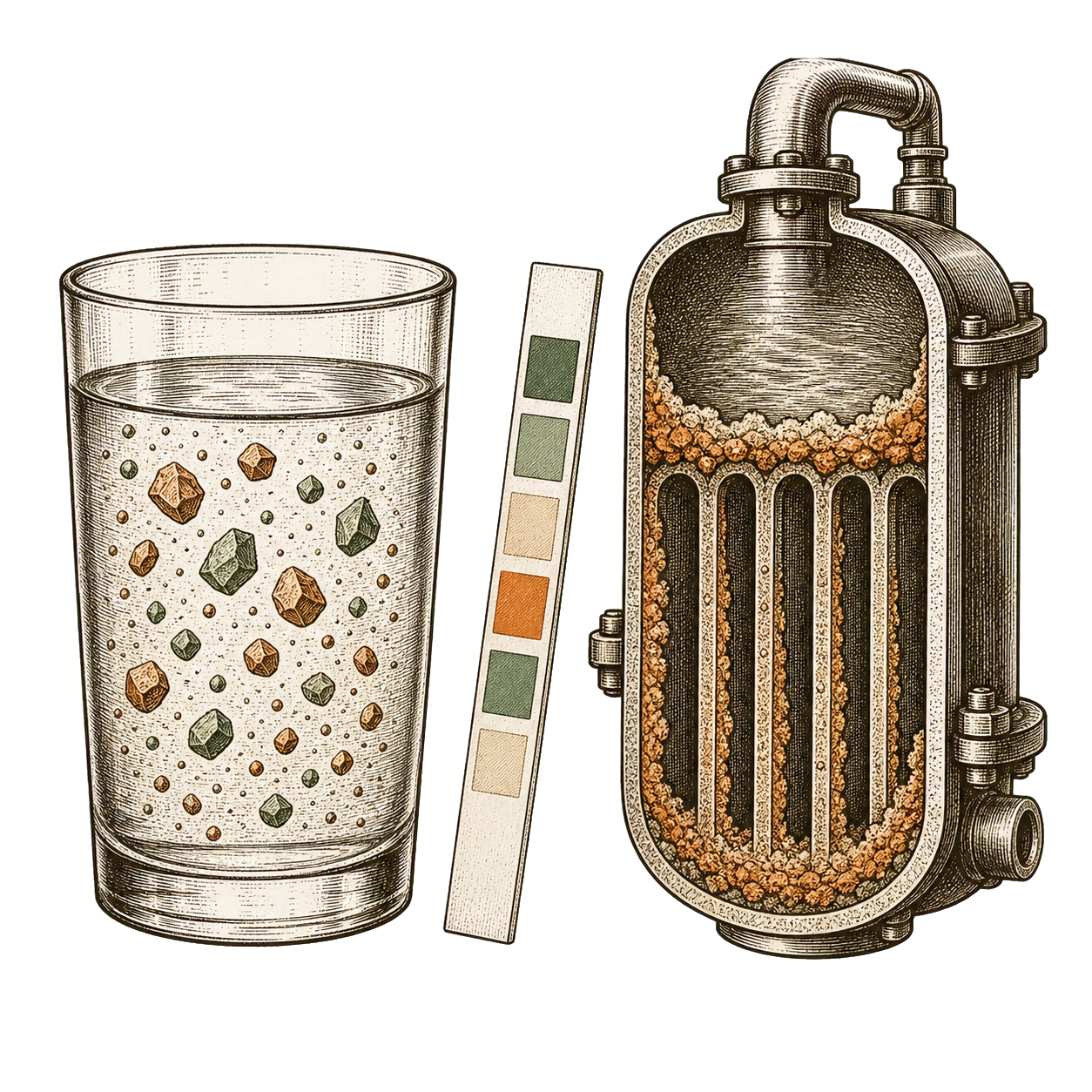
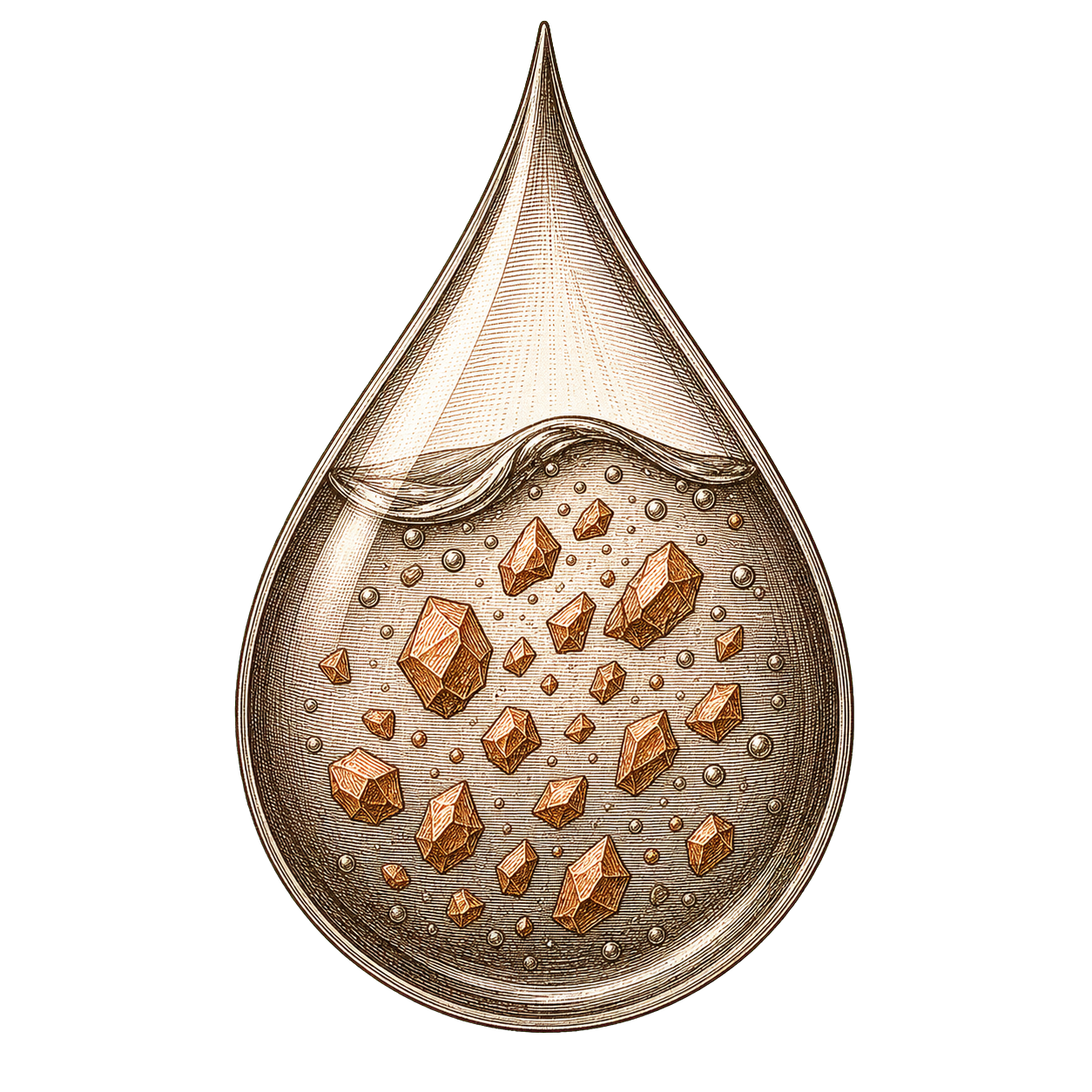
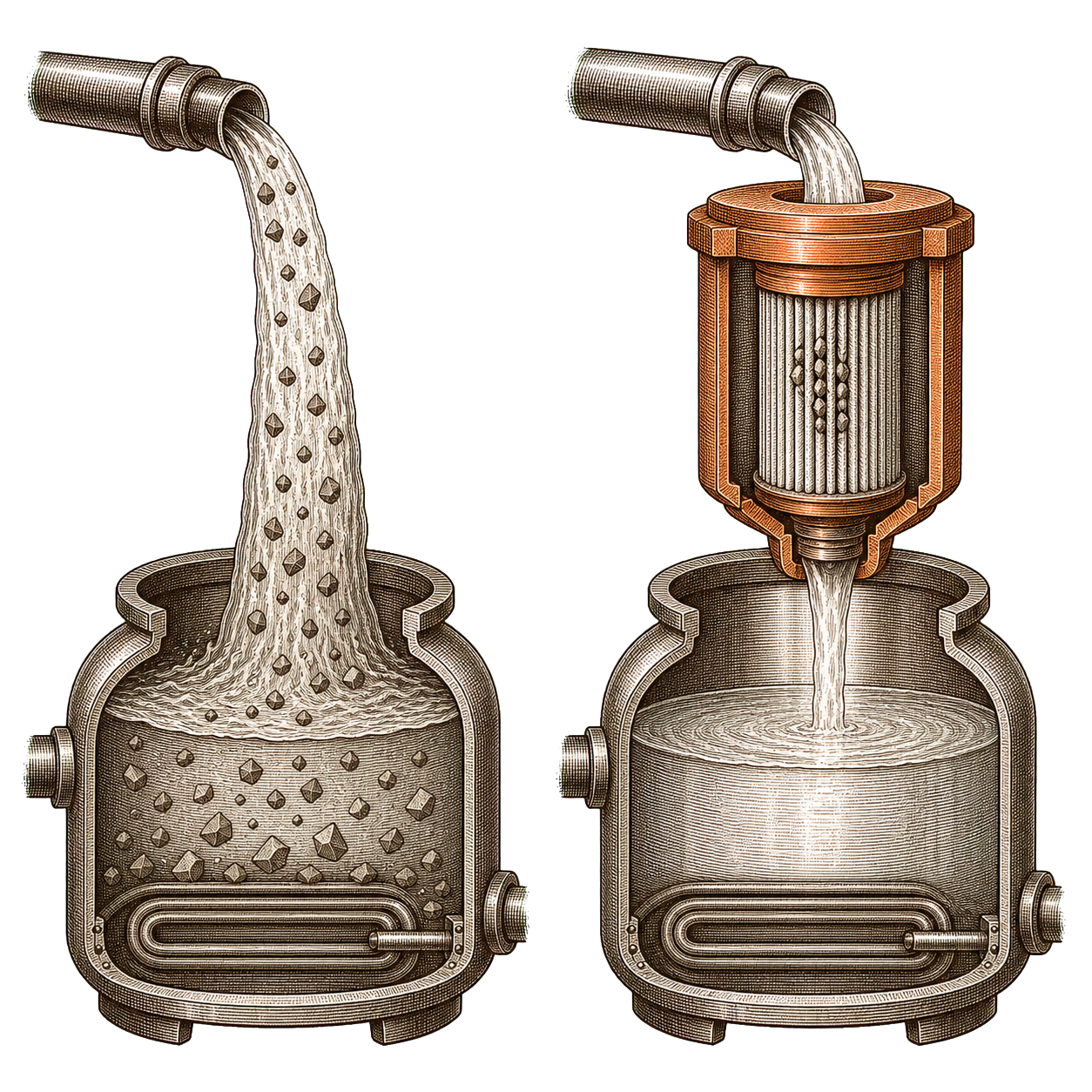
Hard water contains minerals that can form limescale when heated. BRITA’s descaling guidance explains that limescale is more common where the water supply has high mineral content. In an espresso machine, that matters because water moves through small passages, heaters, valves, and a group head. Scale does not need to completely block a machine to become annoying.
You may notice:
- Slower flow
- Weaker steam
- Longer heat recovery
- Strange taste
- More frequent cleaning alerts
- Inconsistent shots that do not match your recipe changes
Those symptoms can also come from grind, puck prep, beans, or dirty parts. Hard water is one suspect, not the only suspect. The tell that points specifically at scale is gradual change while everything else stays the same: if your grind, dose, and beans are unchanged but shots have crept slower and steam weaker over weeks, scale is the prime suspect. Sudden changes are usually recipe; slow drift is usually the machine, and inside the machine the slow drift is usually scale.
Why scale hurts heat and flow specifically
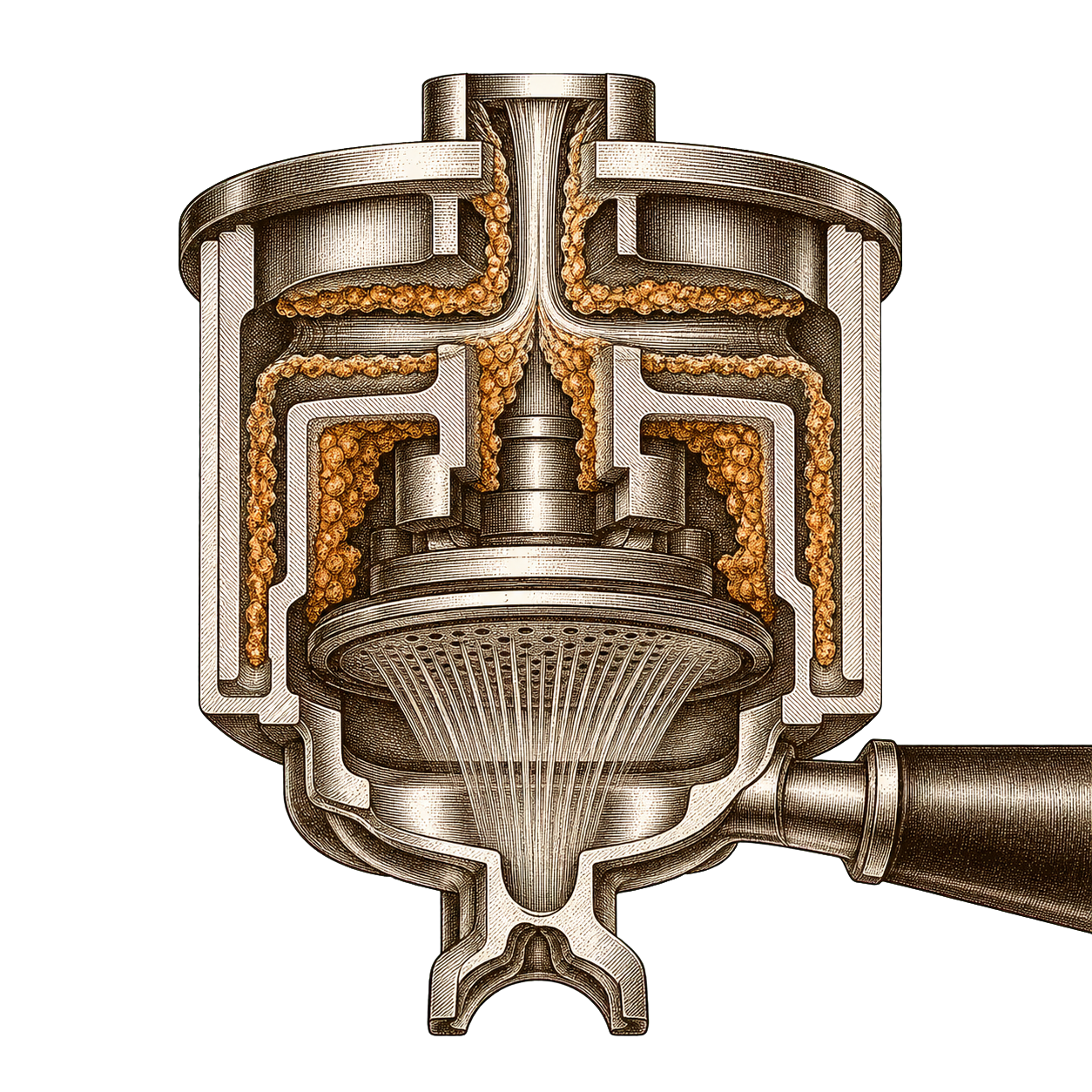
It helps to picture what scale actually does, because it explains both symptoms people complain about. Scale is a hard mineral layer that bonds to the metal inside the heater and the water path. On the heating element, that layer acts as insulation — it sits between the heat source and the water, so the machine has to work harder and longer to reach temperature, which shows up as slower recovery and weaker steam. In the narrow water passages and the group, the same deposits reduce the diameter of the channel, so flow slows and pressure behaves oddly. That is why scaled machines tend to fail on both fronts at once: heat and flow share the same plumbing, and the same deposits choke both. Understanding that is also why descaling works — it dissolves the layer and restores the original geometry.
What Breville says about descaling
Breville’s Bambino descale tutorial calls descaling an essential cleaning process and connects scale prevention to coffee quality. The Bambino Plus manual also warns against highly filtered, de-mineralized, or distilled water because it may affect taste and how the machine is designed to function.
That is the boring but important middle ground: very hard water is risky, but stripping everything out of the water is not automatically better. Espresso water needs to taste good and be appropriate for the machine. This surprises people who assume distilled water is the safe maximum — it is not. Many machines rely on some mineral content to sense water and to taste right, and some manuals explicitly caution against fully de-mineralized water. The goal is a moderate mineral range, not zero.
Should you use filtered water?
Maybe. But “filtered” is not a precise word. Some filters reduce chlorine and taste. Some reduce hardness. Some do very little for scale. Some water treatment can go too far for certain machines.
The practical approach:
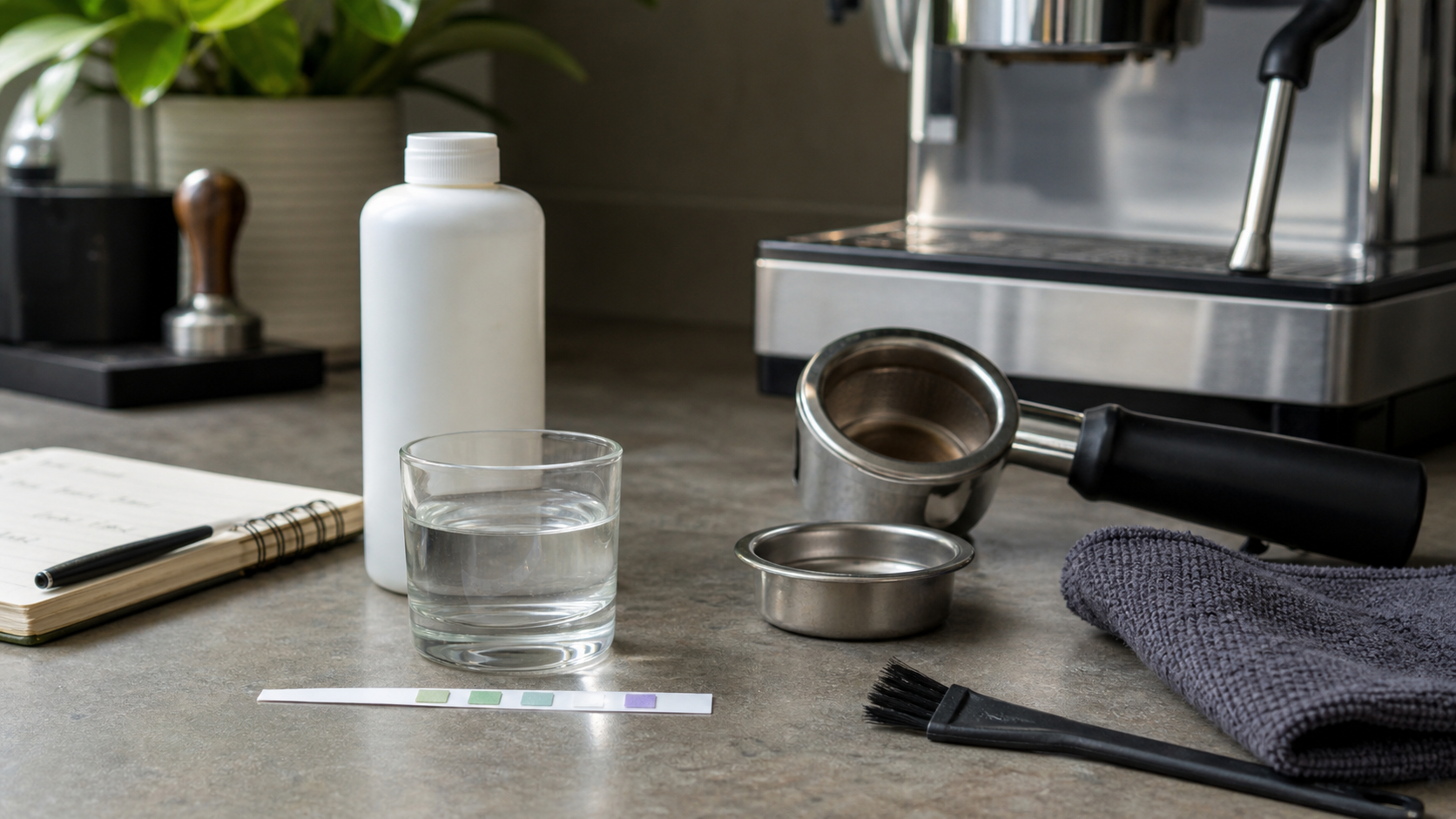
- Check your local water report or use a hardness test strip.
- Read your machine manual.
- Use the manufacturer-recommended filter or a water recipe you understand.
- Keep a descaling schedule.
- Do not use vinegar unless your machine maker explicitly allows it.
If you are new, do not turn water into a chemistry project before you can pull a repeatable shot. Just stop ignoring it. The honest order of operations is: a cheap hardness test strip first, so you know whether you even have a problem; then a filter matched to your result and your manual; then a descaling rhythm as backup. Most people skip straight to buying a filter without testing, which is how you end up over-treating soft water or under-treating hard water. Test, then treat — guessing at water is how machines die quietly.
How hard water ruins the budget-machine dream
Budget machines are attractive because the entry cost is low. But if the machine scales up quickly, the real cost rises. Cheap machines are often less pleasant to service, and a clogged water path can cost more time than the machine feels worth. The cruel part is the asymmetry: an expensive machine is built to be descaled and serviced, so scale is an inconvenience; a cheap machine often is not, so scale is a death sentence. The same neglected water habit that costs a premium-machine owner an afternoon costs a budget-machine owner the whole machine.
That is why water belongs in the buying guide, not only the maintenance guide. A sub-$300 espresso machine can be a reasonable start, but only if the water and cleaning routine are realistic. If you know you will never test your water or descale on schedule, factor a shorter lifespan into the price before you decide it is “cheap.”
Matching a descaling cadence to your water
Manuals tend to give one descaling interval for everyone, but the right cadence depends on your water and your volume. This is the practical framework I use — treat it as my opinion and a starting point, then let your machine’s own alerts and your tasting override it.
If your water is soft, or you run a manufacturer filter matched to your supply, you are mostly maintaining rather than fighting scale. Descaling when the machine asks, and replacing filters on schedule, is usually enough. The risk here is the opposite of neglect — over-treating soft water or using a filter that strips too much, which some manuals caution against.
If your water is moderately hard, descale on the machine’s schedule but verify it against symptoms. The moment you notice the gradual drift — shots creeping slower, steam softening over weeks — move your next descale up rather than waiting for the alert. Alerts on many machines are timed by shot count, not by your actual water, so they can lag behind reality in a hard-water home.
If your water is genuinely hard — the kind that crusts a kettle — assume the standard interval is too generous and treat water at the source first. A filter or a known water recipe does more for longevity than frequent emergency descaling, because you are reducing the mineral load going in rather than rescuing deposits after they form. Frequent descaling on hard water is a sign you are treating the symptom.
The through-line: do not pick a cadence and forget it. Pair a sensible interval with the two-line log from the next section, and let the gradual-drift signal pull your next descale earlier when the machine tells you it is scaling faster than the calendar predicted. Water is the one input where a little attention up front prevents the most expensive failure a small machine can suffer.
A simple maintenance rhythm
Use the manual first, but this is the rhythm I like for beginners:
- Empty drip tray daily.
- Purge and wipe steam wand after milk.
- Backflush only if the machine supports it and the manual instructs it.
- Descale when the machine asks, or sooner if the manual and water hardness justify it.
- Replace filters on schedule.
- Keep a note of date, water source, and symptoms.
That note matters. If shots get slower over months while grind and dose stay the same, you have evidence. The note turns a vague “the machine feels off” into a dated record that tells you scale is creeping — which is exactly the gradual-drift signal that distinguishes a water problem from a recipe problem. A two-line log per descale is the cheapest diagnostic tool you will ever own.
FAQ
Can hard water make espresso taste worse? Yes, water chemistry affects taste, and scale can affect machine behavior. But sour or bitter shots are usually recipe variables first — work through why espresso tastes sour before blaming the water.
Is distilled water safe for espresso machines? Do not assume so. Breville’s manual warns against highly filtered, de-mineralized, or distilled water for the Bambino Plus. Follow your specific machine guidance — the safe target is a moderate mineral range, not zero minerals.
How do I know if scale is my problem and not my recipe? Look for gradual drift with everything else unchanged: slower shots and weaker steam creeping in over weeks. Sudden changes are recipe; slow decline is usually scale.
Can I just descale more often? Sometimes, but prevention is cleaner than repeated rescue. Test hardness and follow the manual instead of guessing. Frequent emergency descaling is a sign your water needs treating at the source, not just rinsing out after the fact.
The decision
If your water is hard, build water care into the setup from day one. Test first so you know what you are dealing with, match a filter to the result and your manual, and keep a descaling rhythm as backup. It is less exciting than buying a tamper, but it protects the machine and makes troubleshooting honest — and on a budget machine, it is the difference between a tool that lasts years and one that dies in one.
Source-verified and edited by Marco Reyes. Data current as of June 2, 2026.
References