espresso grinder vs machine budget
Espresso Grinder vs Machine: Budget Priority
Should your first espresso budget go to the grinder or the machine? Here is the practical split for better shots at home.
Reading brief
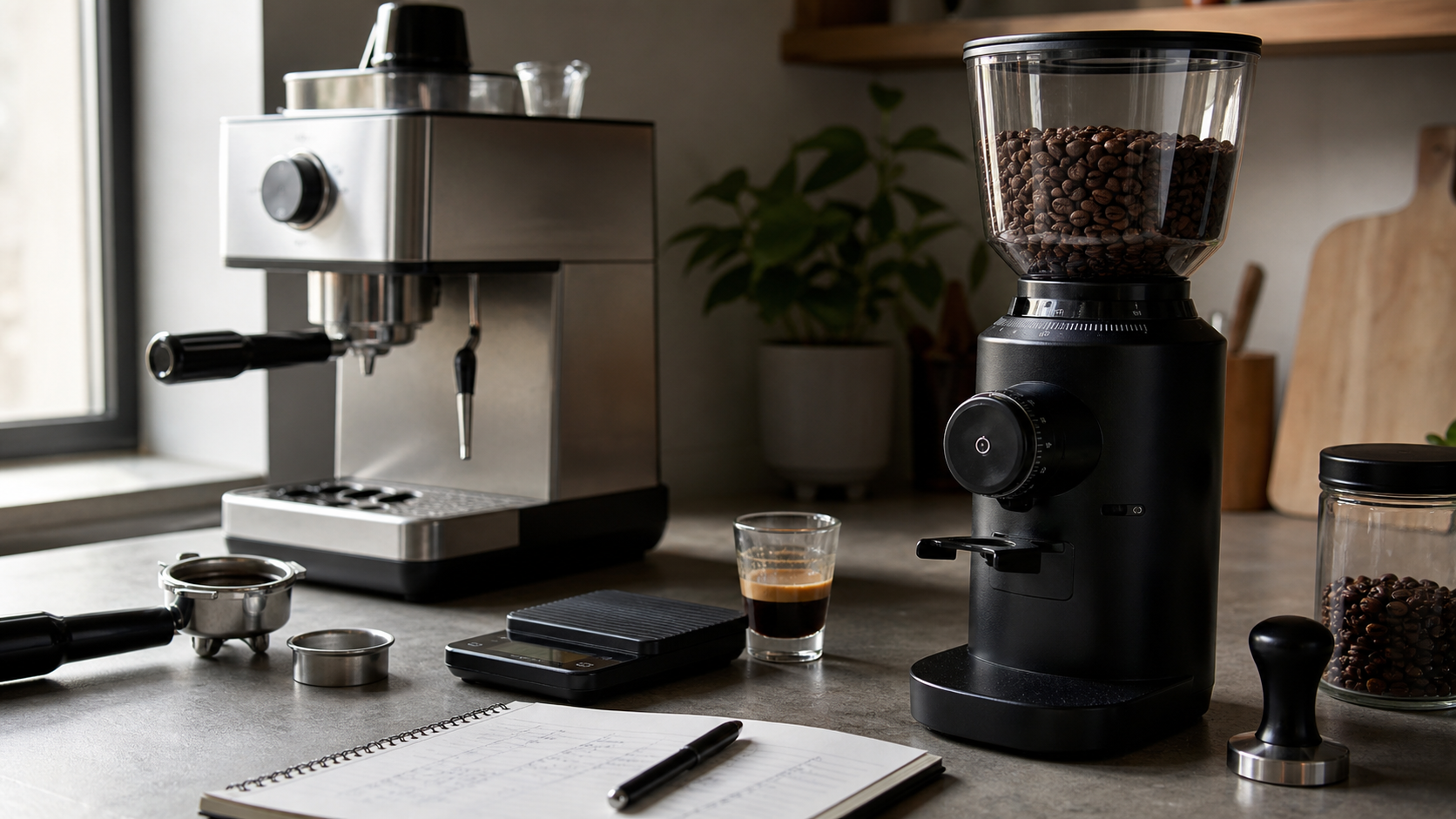
Decision first. Evidence immediately after. By Marco Reyes If your first espresso budget is around $500, spend enough on the grinder that it stops being the bottleneck. A better machine can improve heat, steam, build, and comfort. A better grinder changes whether the water can move through the puck at the right speed in the first place.
My rule for beginners is simple: if the machine can produce real pump espresso, the grinder usually deserves the next dollar. I did not always believe this. My first setup was a respectable machine and a cheap grinder, and I spent months thinking the machine was broken. It was not. The grinder simply could not make a small enough adjustment to fix a fast, sour shot. Swapping the grinder fixed in a week what I had been blaming the machine for all season.
Why the grinder matters so early
Espresso is unforgiving because the grind has to be fine and controlled. CoffeeReview’s espresso grinding guide explains that larger pump or piston machines need a much more precise grind than simpler coffee devices. That is exactly where beginners get stuck. The shot runs too fast, tastes sour, and the machine gets blamed when the grinder simply cannot make a small enough adjustment.
Breville’s Bambino Plus manual says grind size affects how quickly water flows through the coffee and how the espresso tastes. In the same manual, under-extracted espresso is associated with coffee that is too coarse, too little dose, or too light tamping. You can fix dose and tamping with technique. You cannot fix an imprecise grinder with optimism.
Think about what the machine actually controls versus what the grinder controls. The machine sets pressure and temperature — important, but largely fixed once you buy it. The grinder sets resistance, and resistance is the dial you turn every single day as beans age, as roast levels change, as humidity shifts. A machine you cannot adjust is fine. A grinder you cannot adjust is a daily fight.
The first $500 split
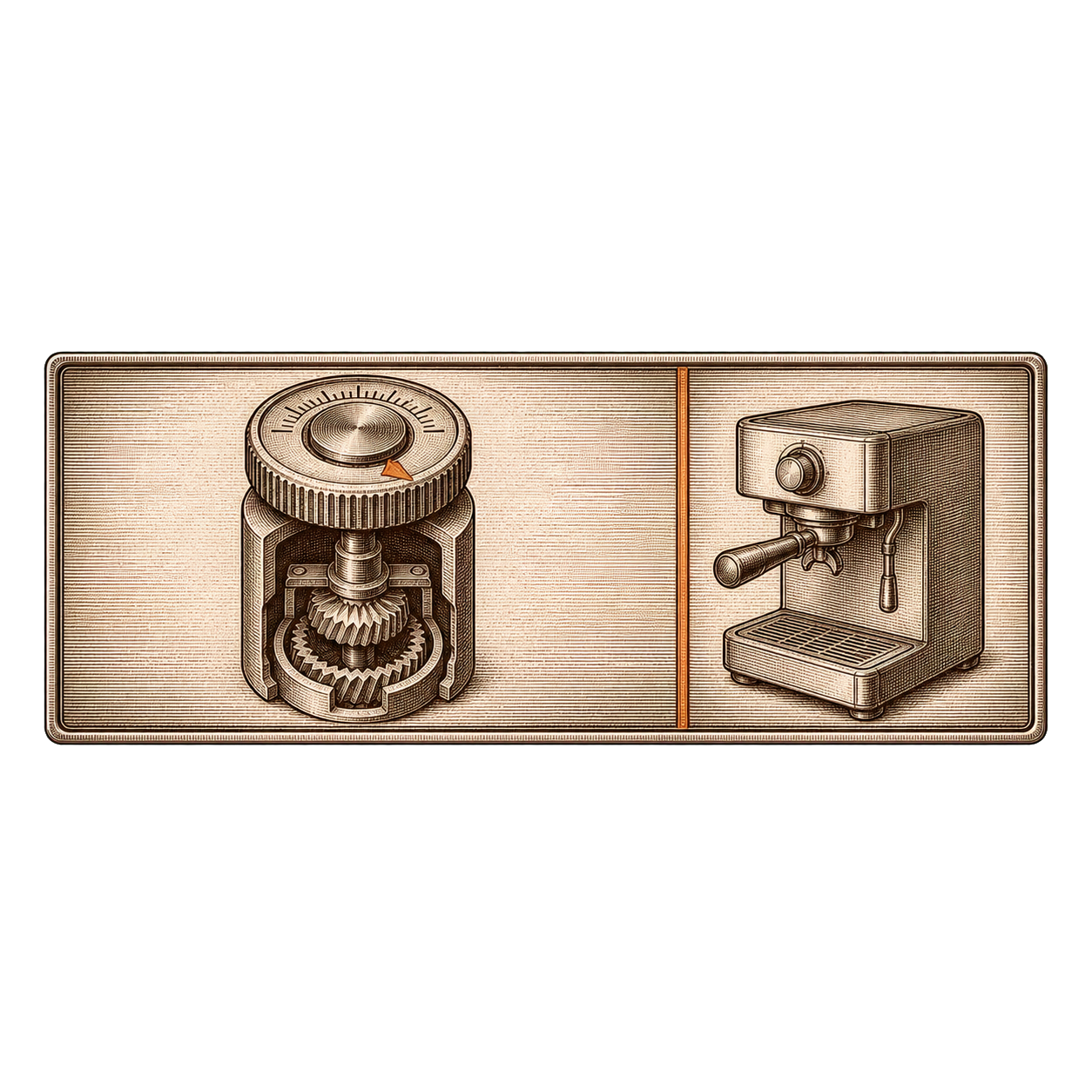
Here is the split I like:
- Machine: enough to get stable basic espresso and a usable basket workflow.
- Grinder: enough to make fine espresso adjustments.
- Scale: cheap but non-negotiable.
- Water and cleaning: boring, but cheaper than replacing parts.
That might feel strange because the machine is the thing people see. But the grinder is the thing that lets the recipe become repeatable. A useful way to test the split: imagine your shot ran too fast and sour this morning. With a good grinder and a basic machine, you make one small adjustment and pull again. With a great machine and a bad grinder, you have no move — the dial you need does not exist. That asymmetry is the whole argument.
Burr versus blade: not actually a debate
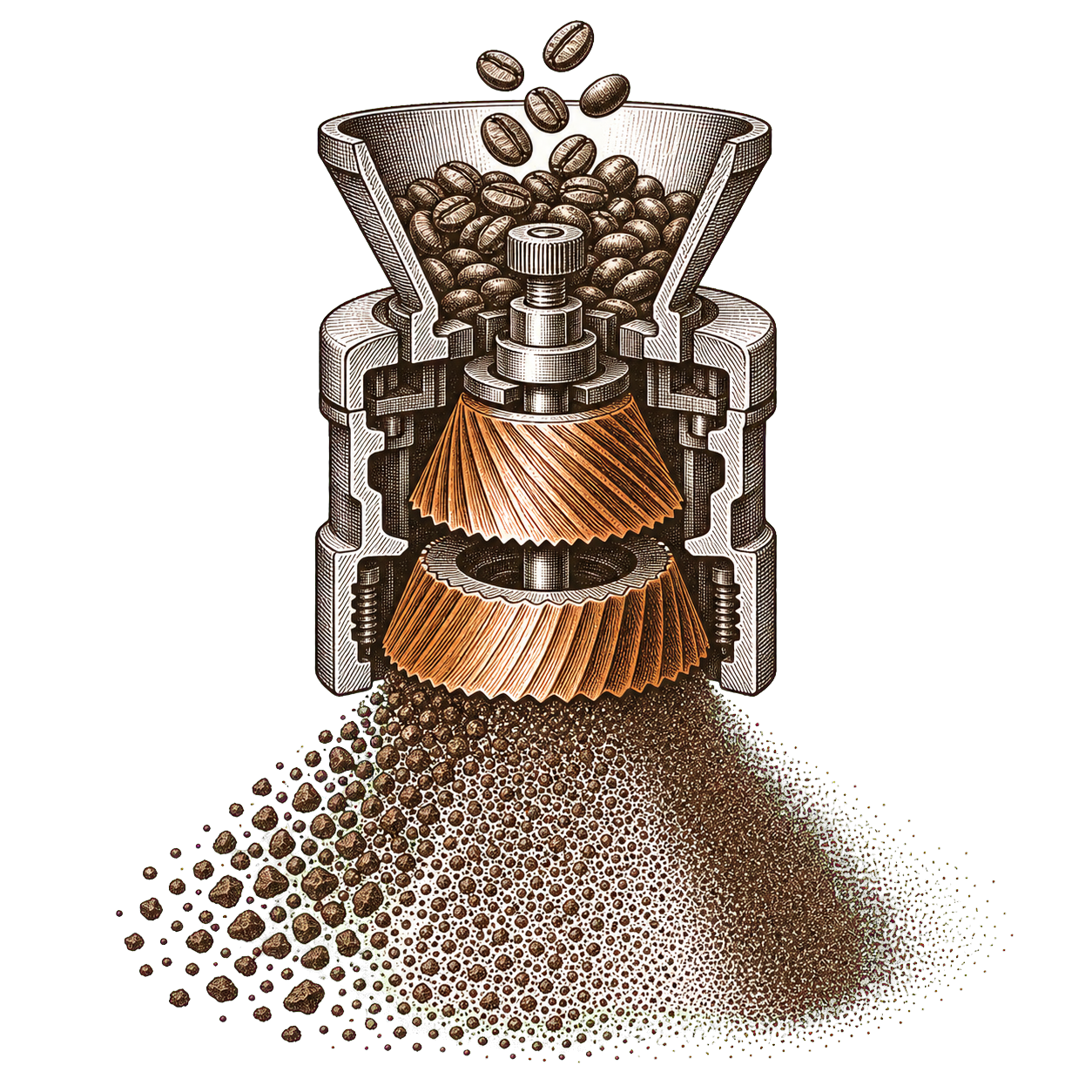
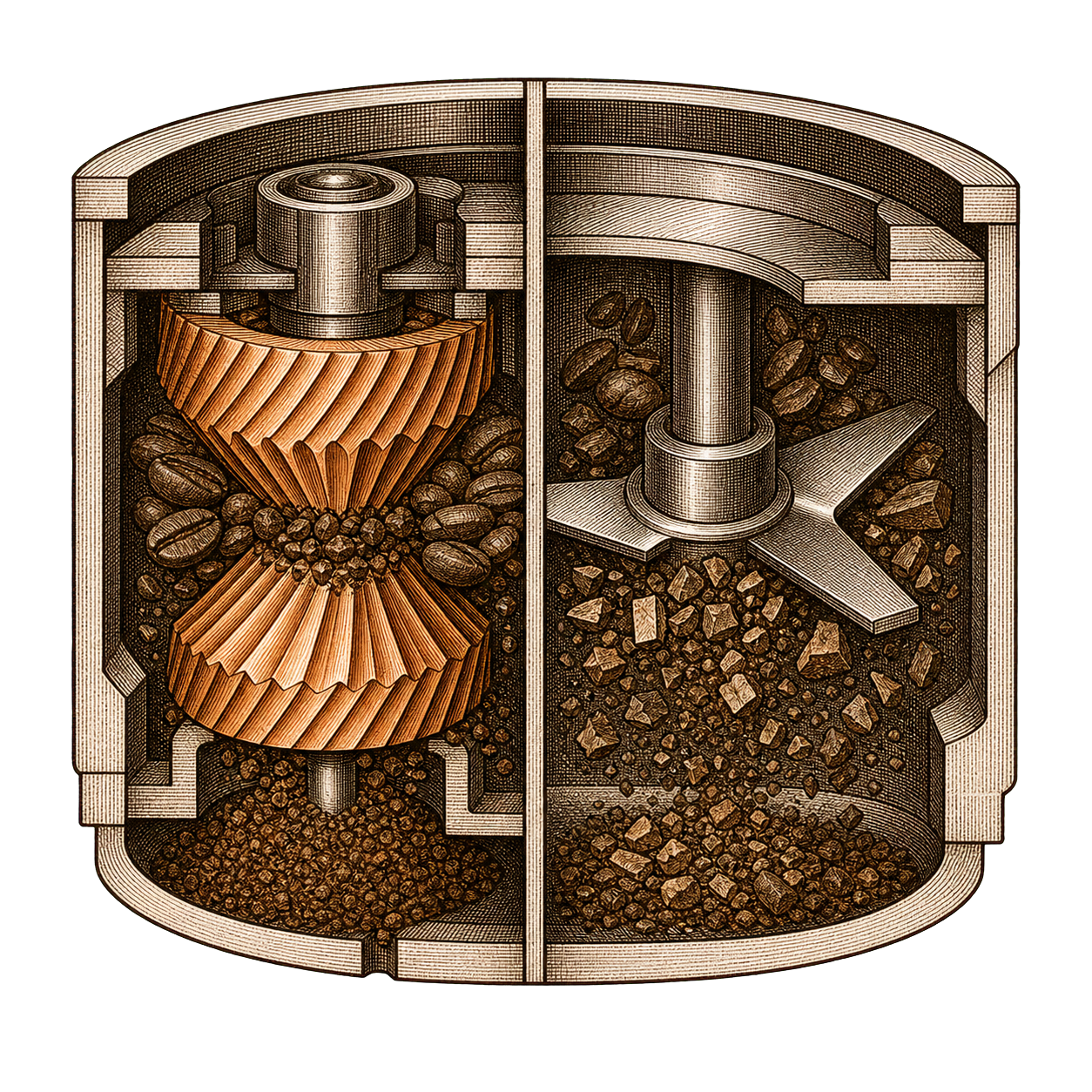
Before the grinder-versus-machine question even starts, settle the grinder type. For espresso, a burr grinder is the floor, not an upgrade. Burrs set a fixed gap and fracture beans to a consistent particle size; a blade spins and shatters beans randomly, leaving powder and chunks in the same dose. That mixture extracts unevenly no matter how good your machine is — the fine particles over-extract and turn bitter while the boulders under-extract and turn sour, in the same cup. No pressure profile fixes that. So when I say “spend on the grinder,” step one is simply: a real burr grinder with an espresso range, before anything fancier.
When to upgrade the grinder first
Upgrade the grinder first if:
- Your shots swing from gushing to choking with tiny setting changes.
- You cannot grind fine enough for non-pressurized baskets.
- You use pre-ground coffee and wonder why every shot tastes flat or sour.
- Your machine is basically capable, but every bean behaves like a new crisis.
The Baratza Encore ESP is one example of an entry grinder designed with an espresso range, and Baratza describes it as optimized for espresso precision. It is not the only answer. The important point is whether the grinder gives you usable adjustment in the espresso zone. When you are shopping, the spec to interrogate is not the burr diameter on the box — it is how many usable steps exist inside the espresso range, because that is where you will spend your entire life with the machine.
When to upgrade the machine first
Upgrade the machine first if:
- You already own a grinder that can dial in espresso.
- Your machine cannot hold a basic workflow together.
- You make several milk drinks back to back and steam power is the daily pain.
- The machine is leaking, scaling badly, or not worth repairing.
This is where people with a solid grinder can justify moving from a bargain machine to something sturdier. Heat stability, steam power, serviceability, and basket size all matter. They just matter after grind control. The clearest signal it is machine time: your shots are consistent and good, and your frustration has moved to something the grinder cannot touch — slow steam recovery, a flimsy portafilter, a tank you fight every morning. When the complaint is no longer about the cup, the machine has become the bottleneck.
The built-in grinder trap
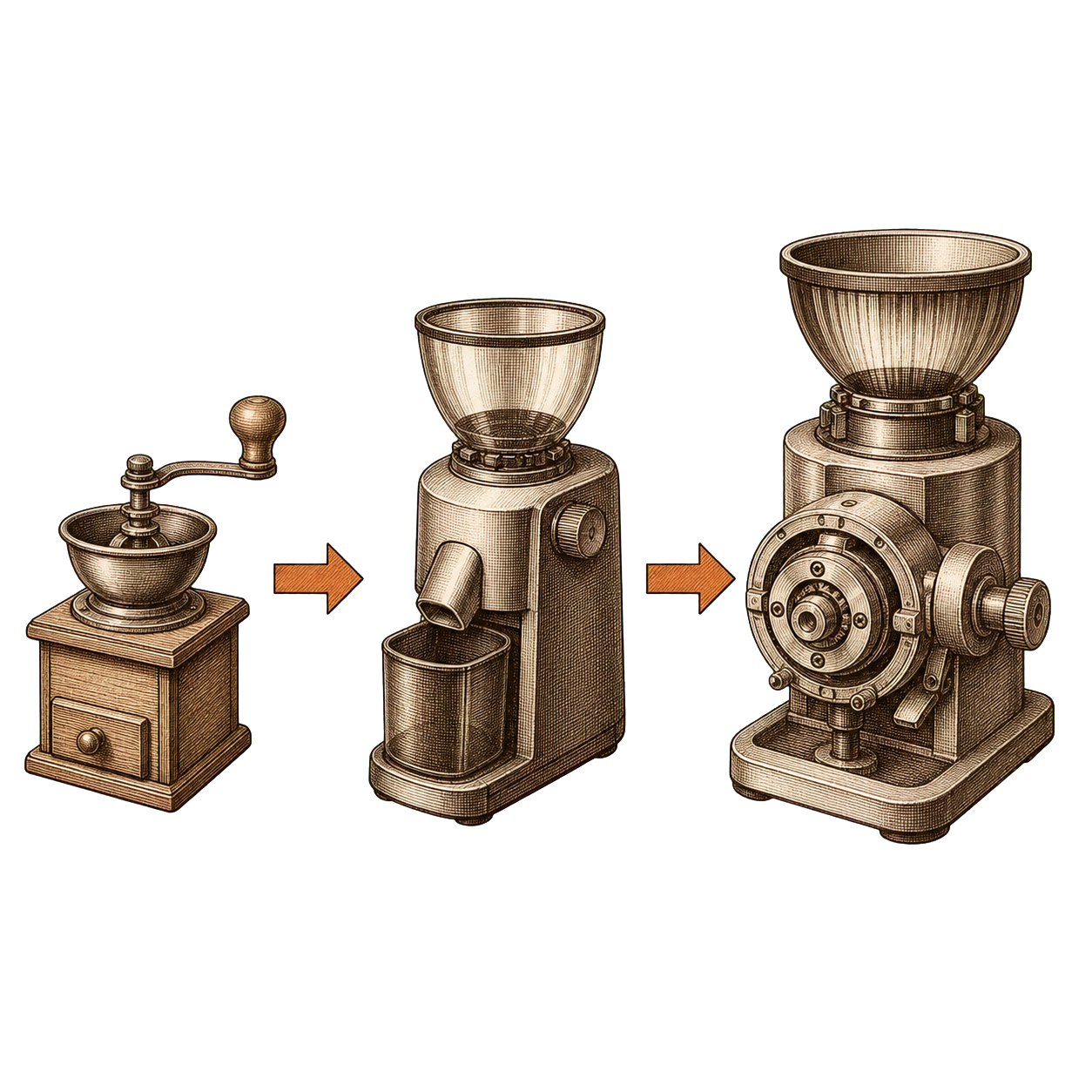
All-in-one machines are attractive because they look complete. Sometimes they are the right convenience choice. But if the grinder is the weak part, you are stuck upgrading around a machine body you still own. Separate pieces are less elegant and usually more flexible. The hidden cost of the combo machine is that when you outgrow the built-in grinder — and most people do — you cannot replace just that part. You end up buying a standalone grinder anyway and leaving half the machine you paid for unused.
If you drink mostly milk drinks and want the least friction, an integrated setup can still be reasonable. If you want to learn espresso and keep improving, separate grinder plus separate machine is usually the cleaner path. When the machine choice itself is between two compact models, the Bambino vs Bambino Plus comparison walks through where the extra money actually goes.
A better beginner order
- Buy or keep a machine that can produce real espresso.
- Get a grinder that can make small espresso adjustments.
- Add a scale and record dose, yield, and time.
- Learn to fix sour shots before changing gear.
- Upgrade the machine only when the limitation is obvious.
That sequence keeps you from buying hardware to solve a recipe problem. Most “I need a better machine” moments are really “I cannot control my grind” moments wearing a disguise, and the only way to tell them apart is to fix the grind first.
How to test a grinder before you commit
You do not need lab gear to judge a grinder — you need to interrogate its adjustment, because that is the trait that decides your daily life. Here is the hands-on check I run, in a shop or with a borrowed unit, before I trust one for espresso.
First, count the usable steps inside the espresso range. Set it to where a shot would choke, then to where a shot would gush, and count the clicks between. More usable steps in that narrow band means more room to land a good shot; a grinder that jumps from choke to gush in two clicks will fight you forever, no matter how nice the burrs are. This is the single most predictive test, and it is the one spec sheets never give you honestly.
Second, check whether the adjustment is stepped or stepless, and whether stepped clicks are small enough. Stepped is fine for beginners and easier to return to a known setting; stepless gives finer control but asks more of you. Neither is wrong — but a stepped grinder with coarse jumps in the espresso zone is the classic budget trap.
Third, grind a dose and look at it. Uniform particles that clump slightly from static are normal; a mix of obvious powder and visible chunks in the same dose is a bad sign, because that is exactly the uneven distribution that under- and over-extracts in the same shot. You are not measuring anything precise here — you are eyeballing whether the burrs fracture consistently.
Fourth, ask about retention and cleaning. A grinder that holds a lot of old grounds between doses makes every recipe a moving target, and one that is a misery to clean will simply not get cleaned. These are livability factors, not performance ones, but they decide whether you keep using the thing.
If a grinder passes the first test — real, usable steps in the espresso range — it is probably worth buying. Everything else on the spec sheet is secondary to that one trait.
FAQ
Can I use pre-ground coffee for espresso? You can use it with pressurized baskets, but it removes the main control you need: grind size. It is better for convenience than learning, and it caps how good your shots can ever get.
Is a hand grinder enough? Yes, if it is built for espresso adjustment and you are willing to grind by hand. For one or two drinks a day it can be the best budget move there is, putting more burr quality in your hands per dollar than an electric at the same price.
How should I split a $500 first budget? Lean it toward the grinder more than feels natural — enough machine for real pump espresso, then as much grinder as the rest allows. The grinder is the part you adjust daily.
Does the machine matter at all? Absolutely. Machines decide heat, pressure behavior, milk steaming, comfort, and durability. But if the grinder cannot dial in, the machine never gets a fair chance.
The decision
For a first serious setup, buy the grinder you will not immediately outgrow, then buy the machine that matches your drink style. The grinder is the dial you turn every morning; the machine is the stage it performs on. If the espresso tastes sour or runs fast, go to the sour-shot guide before blaming the machine — and if you are still assembling the whole kit, the beginner setup guide puts this split in the context of everything else you need. If you are deciding whether a grinder is even necessary yet, read do you need a grinder for espresso? next.
Source-verified and edited by Marco Reyes. Data current as of June 2, 2026.
References