small espresso machine apartment
Small Espresso Machine Setups for Apartments
A small-kitchen espresso setup guide for apartments: machine width, grinder space, water access, steaming clearance, and cleanup.
Reading brief
Decision first. Evidence immediately after. By Marco Reyes A small espresso setup is not just a narrow machine. It is a workflow that still lets you grind, dose, tamp, pull, steam, dump the puck, and wipe down without moving five objects every morning.
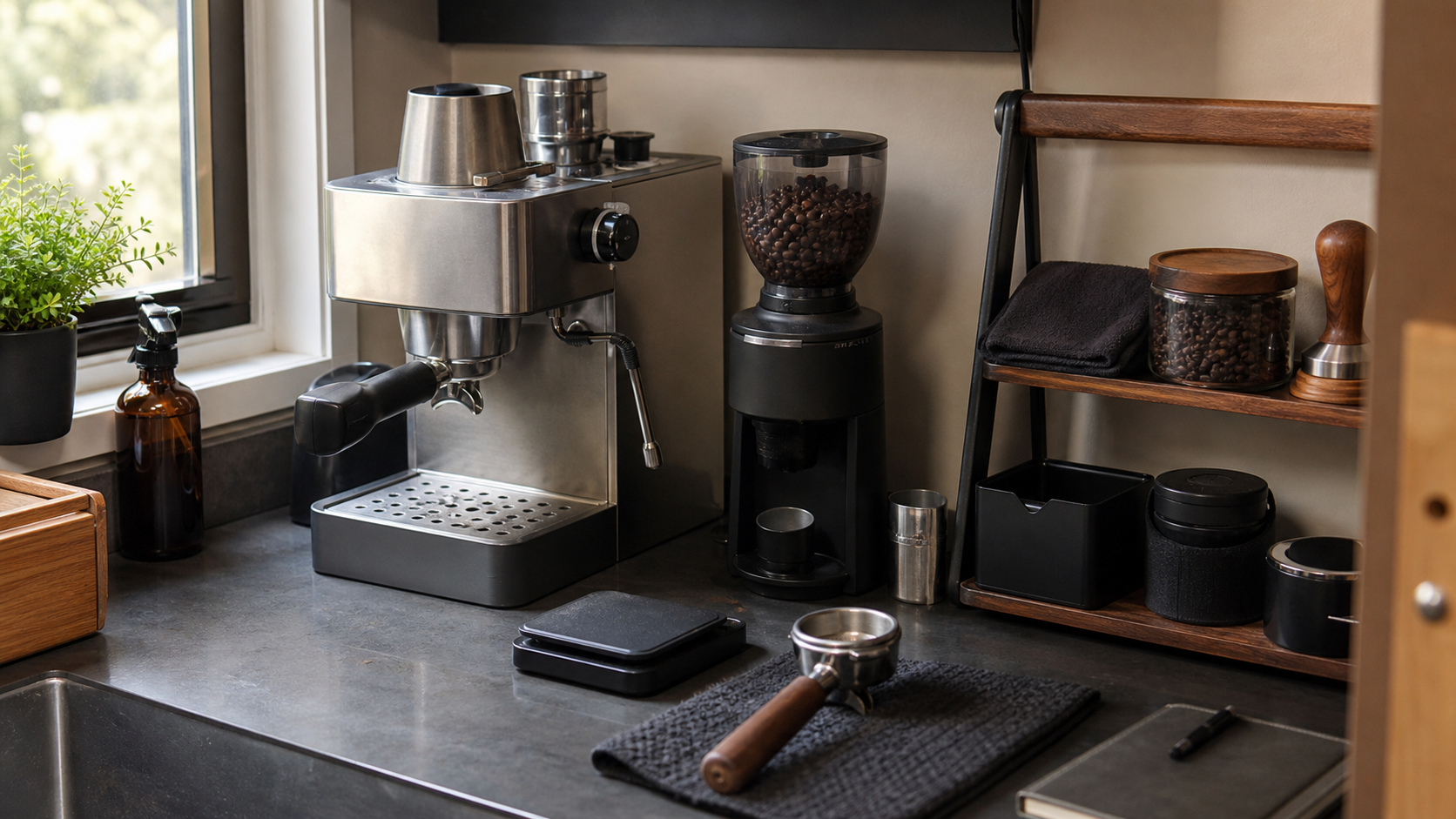
The best apartment espresso setup is the one you can leave assembled. If the machine has to live in a cabinet, you will use it less — I have watched it happen to friends, and it happened to me in my first small kitchen. The machine that gets put away after every use slowly becomes the machine you stop using. So this guide is less about finding the narrowest brewer and more about designing a corner you will actually return to every day.
Measure the whole workflow
Before buying, measure these zones:
- Machine width
- Grinder width
- Space in front for locking in the portafilter
- Height under cabinets
- Water tank access
- Steam wand swing
- Room for a cup and scale
- Knock box or trash position
- Drying space for the portafilter and basket
This is why compact machine lists can mislead. A machine can be narrow and still annoying if the water tank only fills from the back or the steam wand needs more side clearance than you have. The number on the spec sheet is the machine’s width; the number that matters is the width of the whole motion you perform to make a drink. I have seen a 6-inch machine create a 30-inch working mess because nothing around it had a home.
A compact machine example
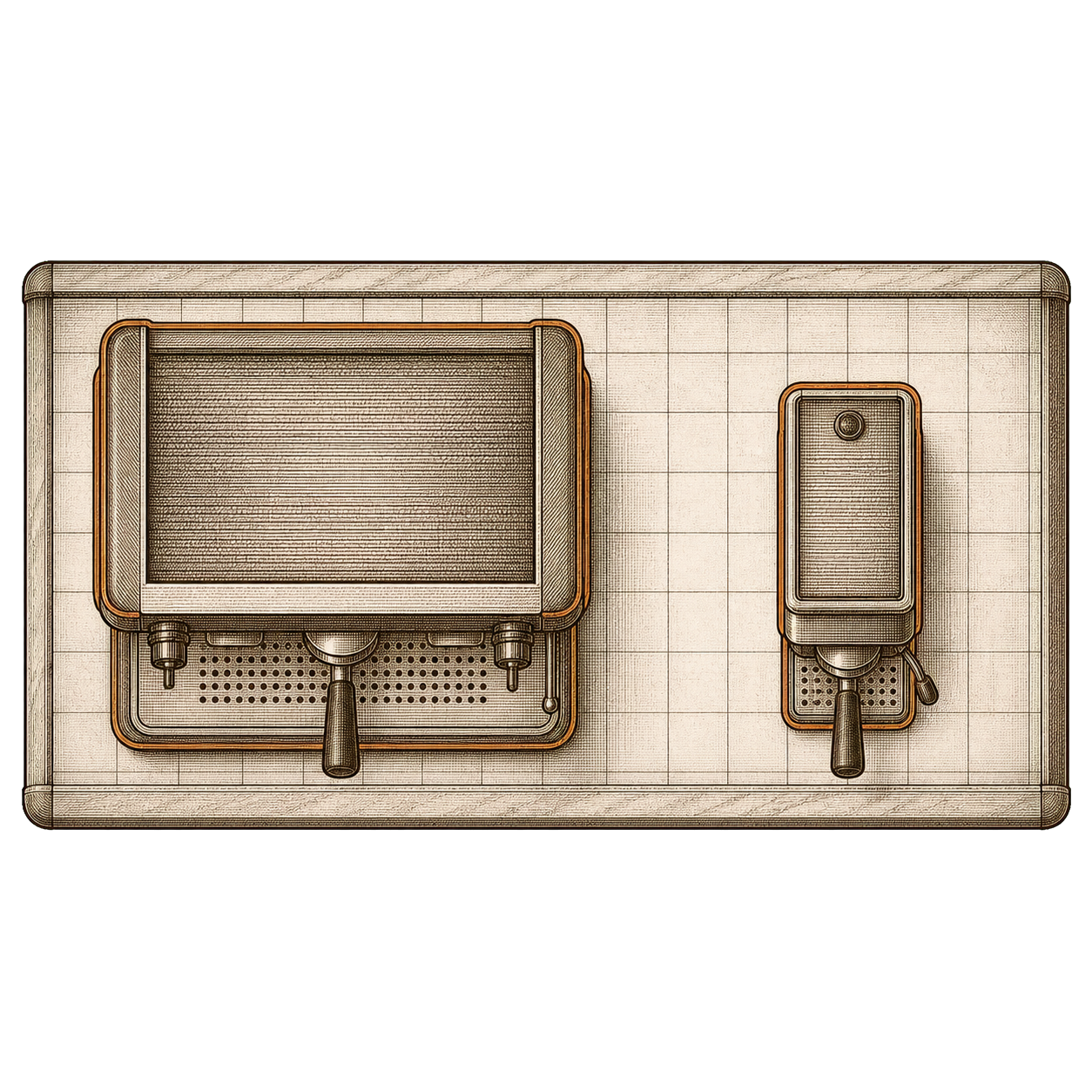
Breville lists the Bambino at 6.25 x 13.5 x 12 inches and the Bambino Plus at 7.5 x 13.5 x 12 inches. Tom’s Guide also describes both as compact machines, with the Bambino slightly narrower than the Plus in its comparison. Notice that the depth and height are identical between the two — 13.5 inches deep, 12 inches tall — and only the width changes. That tells you something useful: in a tight apartment, the choice between these two is partly a 1.25-inch width decision, and partly a milk-and-tank decision.
Those dimensions are useful because they show how small a real pump espresso machine can be. But they are only the machine. The 13.5-inch depth is the number people forget — many apartment counters are shallow, and a machine that needs 13.5 inches plus hand room behind it for the tank can crowd a 16-inch counter fast. If you are choosing between those two specific models, the Bambino vs Bambino Plus comparison covers the milk and footprint tradeoffs in full.
Do not forget grinder space
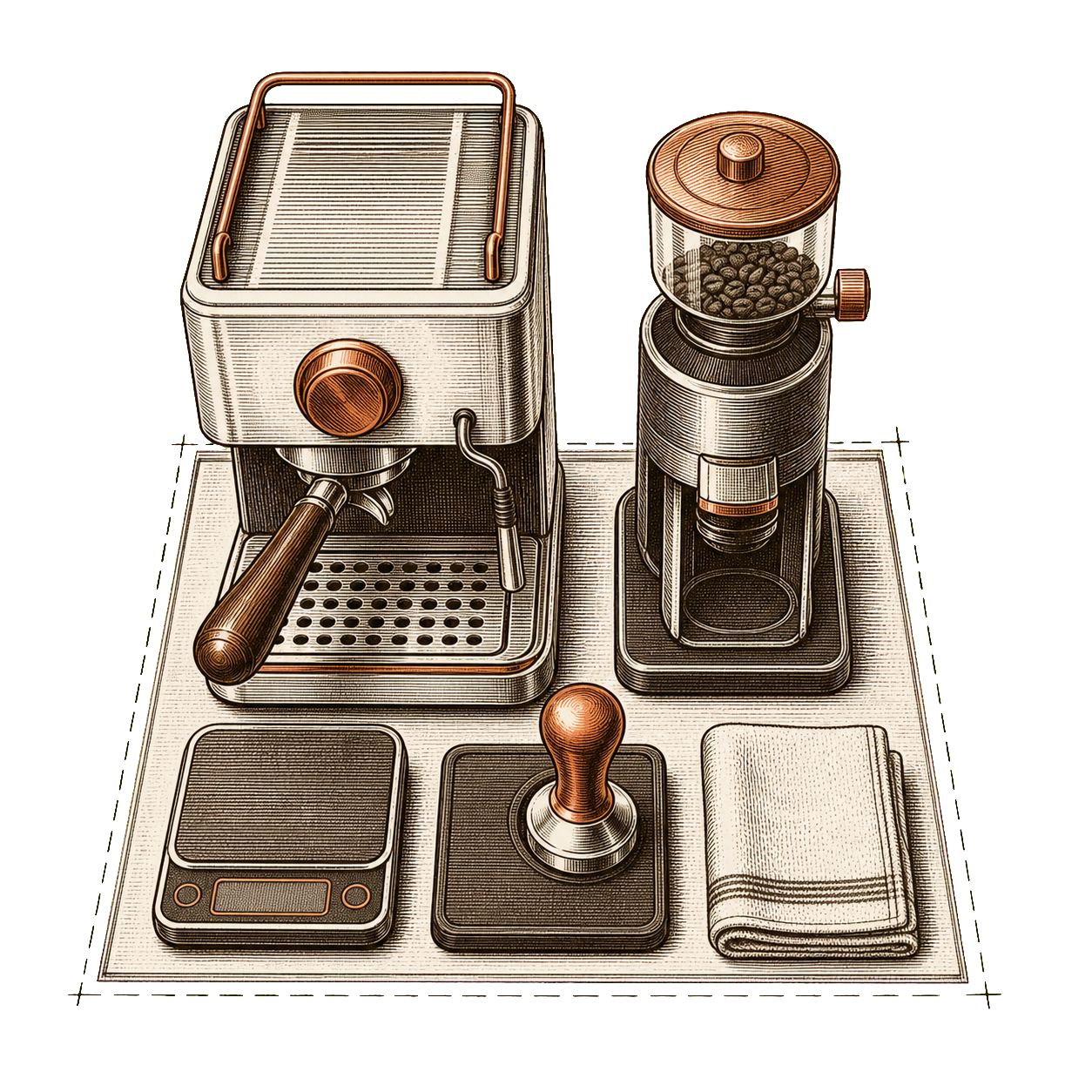
If you buy a compact machine and a bulky grinder, you still have a big setup. If your grinder lives across the kitchen, your workflow gets messy. Grounds spill during transfer, the scale migrates, and the machine becomes a weekend toy. This is also why the grinder vs machine budget split matters in a small kitchen: the grinder earns its counter space.
For apartment setups, I like a tight triangle:
- Grinder directly beside the machine.
- Scale in front of the group head.
- Knock box or trash within one step.
If that triangle fits, the setup will feel calmer. A real consideration for tiny counters is grinder shape: a tall, narrow single-dose grinder often fits an apartment better than a wide grinder with a big bean hopper, even if the wide one is “smaller” on paper, because it claims less of the precious horizontal strip beside the machine. Measure your grinder’s footprint as carefully as the machine’s.
Water tank access matters
Rear water tanks are common on compact machines. That is fine on an open counter, but annoying under deep cabinets. Before buying, check whether you can remove or fill the tank without sliding the whole machine forward. The Bambino models, for instance, share that 13.5-inch depth and a rear tank — lovely on an island, less lovely shoved under a low cabinet where you cannot lift the lid.
If you have to move the machine every morning, leave extra depth for your hands and the power cord. A machine that technically fits can still be bad at living there. My test before buying anything for a small kitchen: can I fill the water, lock the portafilter, and swing the steam wand without lifting or sliding the machine? If the answer is no, the dimensions lied to me.
Milk steaming needs room
Straight espresso needs less space than lattes. Milk adds:
- Jug storage
- Steam wand clearance
- Wipe-down area
- More drip tray emptying
- A sink routine
The Bambino Plus makes milk easier with a hands-free automatic steam wand, according to Breville’s product page, but automatic does not remove the space requirement. You still need room for the jug and wand, and you still need to rinse and wipe after every milk drink. If anything, the convenience of automatic milk means you make more milk drinks, which means the sink routine matters more, not less. Plan the wipe-down zone, not just the brewing zone.
My smallest setup layout
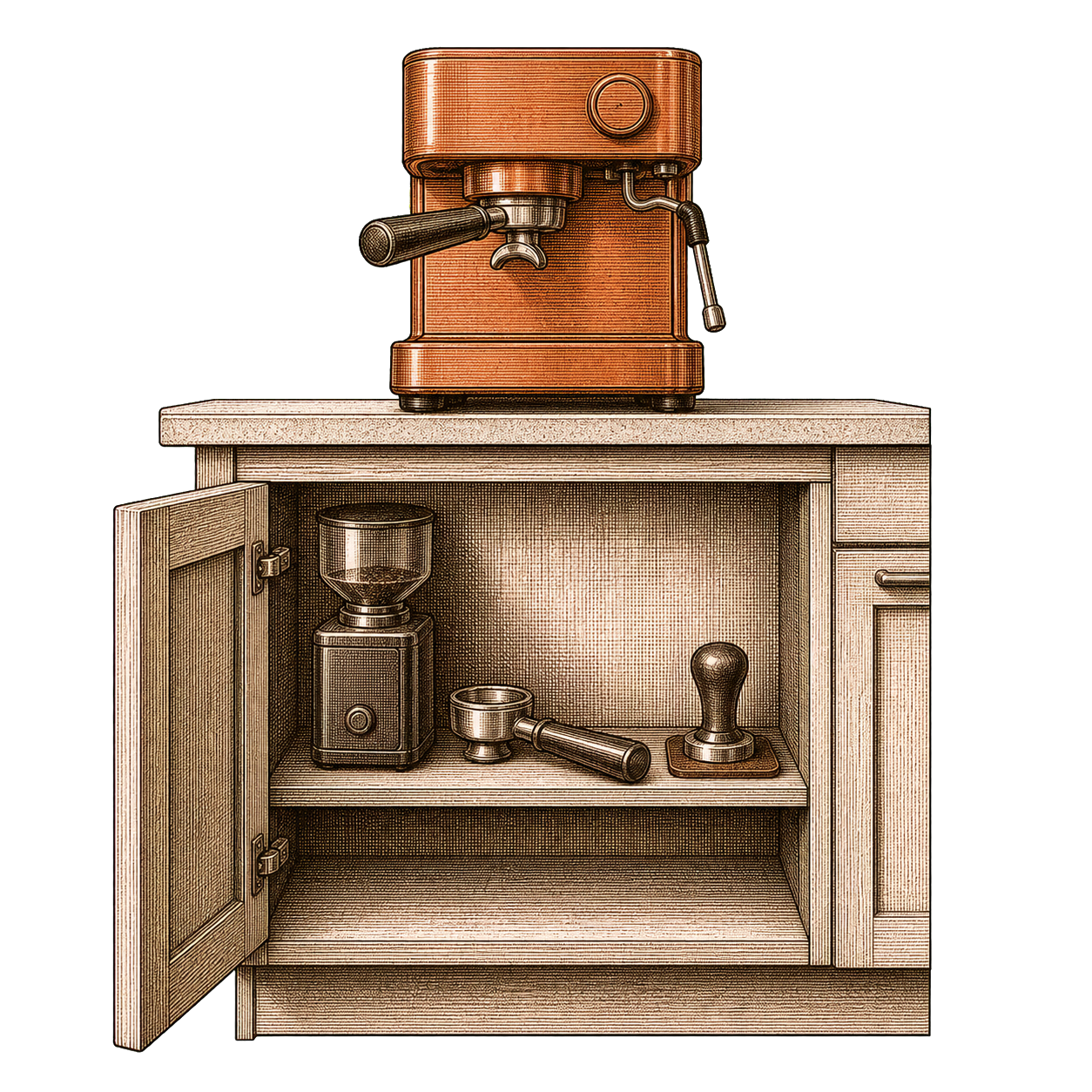
For a narrow counter, I would use:
- Compact machine on the side closest to the sink.
- Grinder on the other side, close enough to dose directly.
- Small scale stored on top of a towel.
- Knock bowl instead of a wide knock box.
- Beans in an airtight container in a cabinet, not on the counter.
- Cleaning brush hanging or stored in the drip tray area.
That keeps the visible setup dense without making every shot a rearrangement. The single best space move I ever made in a small kitchen was going vertical: a narrow shelf above the machine for beans, jug, and tamper freed up the counter for the only two things that need to stay there — the machine and the scale. Everything that is not actively in your hands during a shot can live above or below.
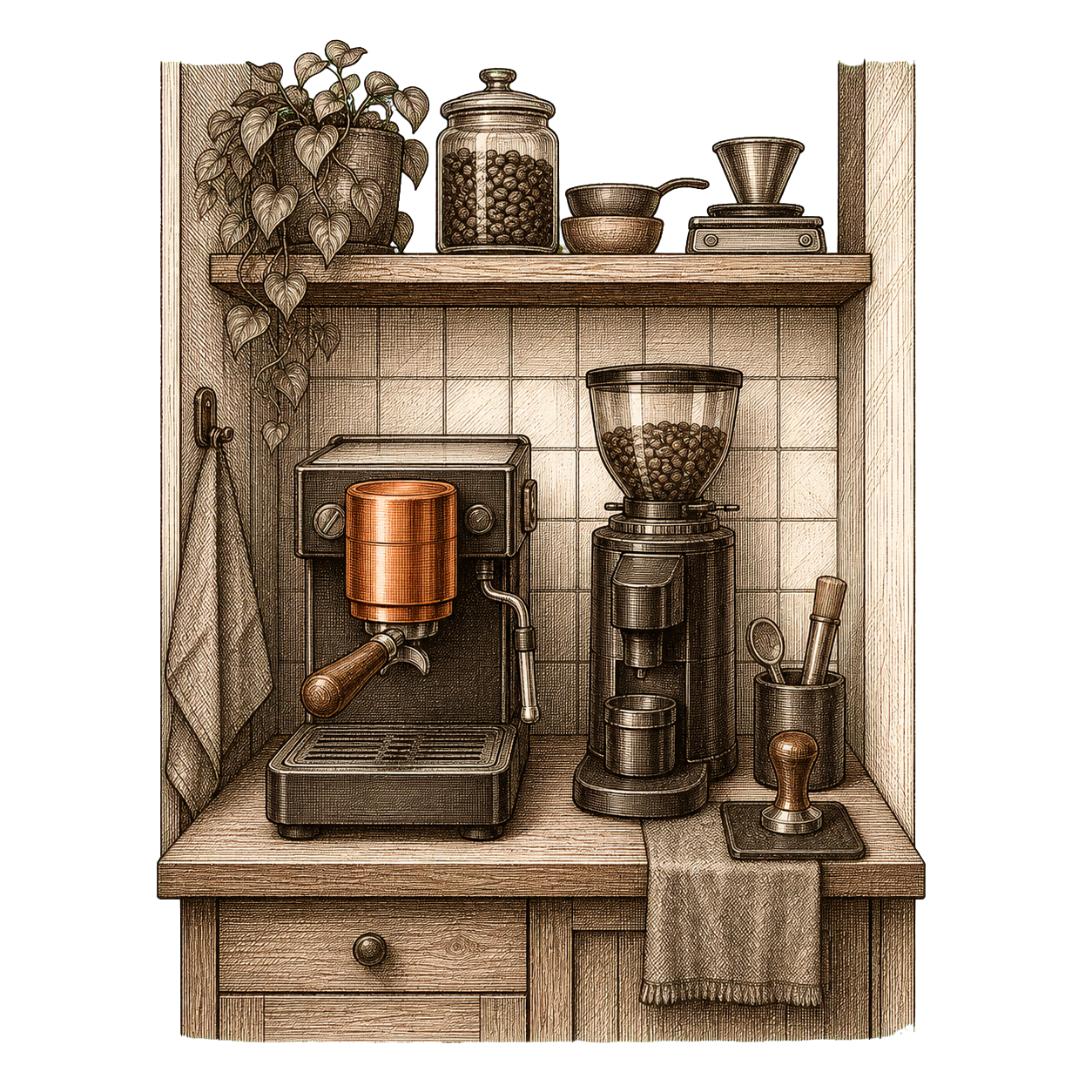
Three apartment layouts that actually work
Most small-kitchen advice stops at “buy a narrow machine.” The harder question is where everything goes. Here are three layouts I have used or set up for friends, each suited to a different constraint.
The linear strip is for a narrow counter against a wall. Machine nearest the sink, grinder immediately beside it, scale in front of the group, beans on a shelf above. Everything sits in one line so you never reach across anything. The water tank should fill from a side you can access without sliding the machine — on a rear tank, leave a hand’s width behind it. This is the most common apartment situation and the easiest to keep tidy, because there is only one axis of movement.
The corner L uses two perpendicular counter runs meeting at a corner. Put the machine on one leg and the grinder on the other, with the corner itself as your dosing and tamping zone. This works well when neither run is long enough for a full linear strip, and it keeps the messy steps — dosing, tamping, knocking out — clustered at the pivot where spills are easy to wipe. The trap is the corner cabinet above: check your under-cabinet height before assuming a rear-tank machine can have its lid lifted there.
The cart or island is the move when your fixed counters are simply full. A small rolling cart dedicated to coffee gives you a permanent, leave-assembled station you can wheel to where the outlet and light are best. It is the one way to “add counter” in a rental without renovation, and because it is dedicated, the workflow triangle — grinder, scale, knock bowl — stays intact instead of fighting the toaster for space.
Whichever you choose, the test is the same: can you complete a full drink — grind, dose, tamp, pull, steam, knock out, wipe — without relocating a single object that is not coffee gear? If yes, the layout is right, regardless of how many square inches it occupies.
What to skip in a tiny kitchen
Skip large tamping mats, oversized knock boxes, bean cellars, decorative canisters, and tool stands. They look good online and steal the exact space a beginner needs for actual work. The corner-tamping-station aesthetic you see in photos is built for big kitchens with counter to spare; in an apartment it is just clutter that pushes your scale onto the stove.
The first accessory worth space is the scale. The second is a towel. Everything after that has to earn its footprint by replacing a step you do badly, not by adding a step you do not need.
FAQ
What machine width should I look for? Under 8 inches wide is genuinely compact for a semi-automatic machine — the Bambino is 6.25 and the Plus is 7.5 — but depth and water access matter just as much. Check the 13.5-inch class of depth against your counter before you fall in love with a width.
Can I keep the grinder in a cabinet? You can, but it adds friction. If you make espresso daily, the grinder should stay near the machine. A grinder you have to lift out and plug in every morning is a grinder you will eventually stop using.
Is a small setup worse for espresso? No. Small setups can make excellent shots if the grinder, scale, and workflow are repeatable. Footprint has nothing to do with cup quality. For the full first-purchase plan, start with the beginner espresso setup guide.
Does an automatic-milk machine save counter space? No — it saves you the skill of steaming, not the space. You still need jug room, wand clearance, and a wipe-down zone. Plan for milk the same way regardless.
The decision
Buy for the workflow, not the product photo. If the setup lets you grind, weigh, pull, steam, and clean without moving half the kitchen, it is small enough. Measure depth as carefully as width, give the grinder a permanent home beside the machine, and go vertical for everything else. Then settle the gear money question with the grinder vs machine budget guide.
Source-verified and edited by Marco Reyes. Data current as of June 2, 2026.
References